My engagement with urban art exhibitions did not begin as a curatorial ambition. It began with a difficulty: the lack of rigorous, coherent narratives within institutional contexts.
In the late 2000s and early 2010s, graffiti and street art entered museums on an unprecedented scale. Visibility was no longer the issue. Public interest was strong, institutional interest followed, and exhibitions multiplied rapidly. Yet most of these projects relied on simplified frameworks: the same names, the same linear timelines, and the same types of works—largely because they were the easiest to show, transport, insure, and circulate.
What was missing was not attention, but method. Each exhibition seemed to restart the story from scratch, as if no previous research had existed. The history of these practices was being told repeatedly, but rarely accumulated.
Exhibitions as a Testing Ground
Faced with this situation, exhibitions became the only available space to test questions publicly. They functioned less as showcases than as provisional research environments.
Rather than celebrating urban art, my early curatorial projects aimed to examine what happens when practices rooted in illegality, ephemerality, and informal circulation are translated into institutional formats. Across different contexts, the same issues kept resurfacing: disappearance, destroyed works, fragile archives, local scenes, and informal networks that resisted standard exhibition models.
Exhibitions were effective at making these tensions visible. They were far less effective at sustaining them. Once a show closed, much of the research it contained disappeared from view, leaving little trace beyond documentation and memory.
Bologna as a Turning Point
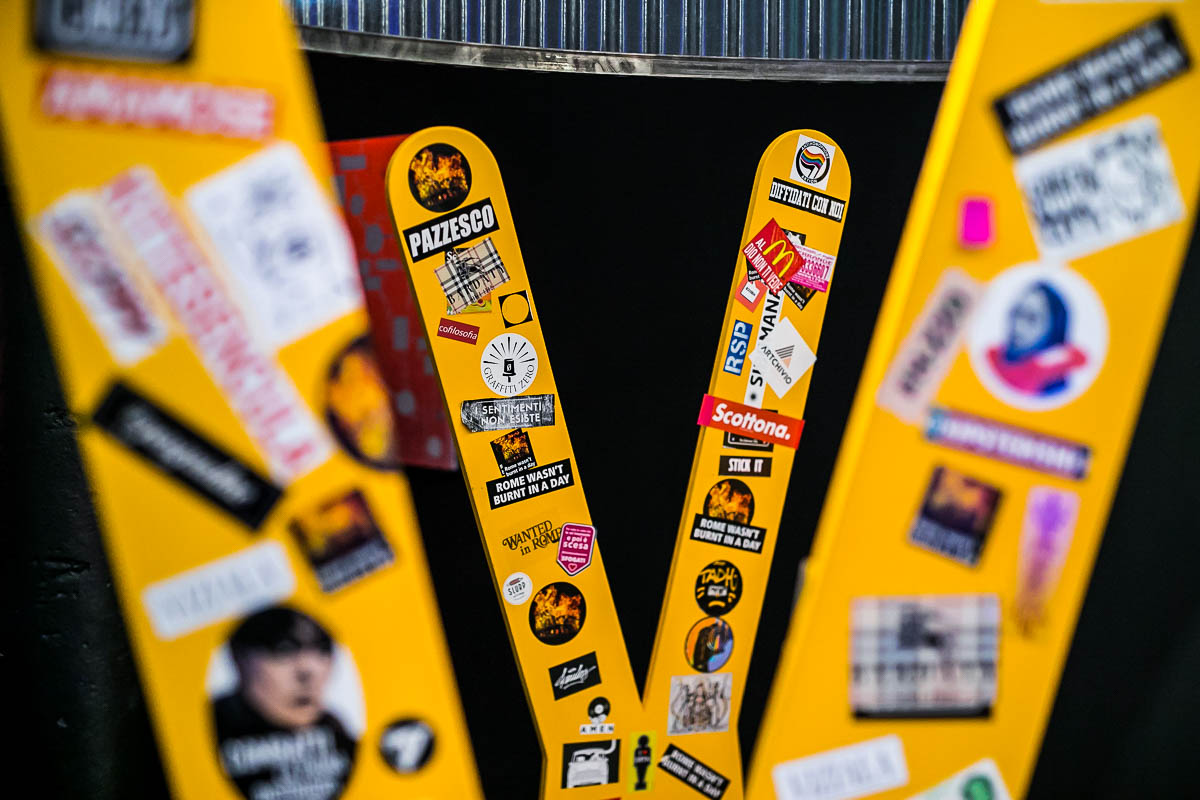
A decisive moment in this research came in Bologna in 2016, with Banksy & Co. L’arte allo stato urbano. Working with painted walls saved from destruction forced a fundamental question to the surface: what does it mean to patrimonialize practices born out of illegality, ephemerality, or an explicit refusal of institutional frameworks?
The project did not aim to legitimize graffiti or street art by placing them in a museum. It sought instead to examine the implications of preservation itself—what is lost, transformed, or neutralized when such practices are removed from their original contexts.
The exhibition quickly became a site of friction. Accusations of “privatizing the city” emerged, as if institutional display necessarily implied appropriation. These reactions revealed precisely what the project was trying to address: the unresolved ambiguities at the core of the relationship between urban art and institutions.
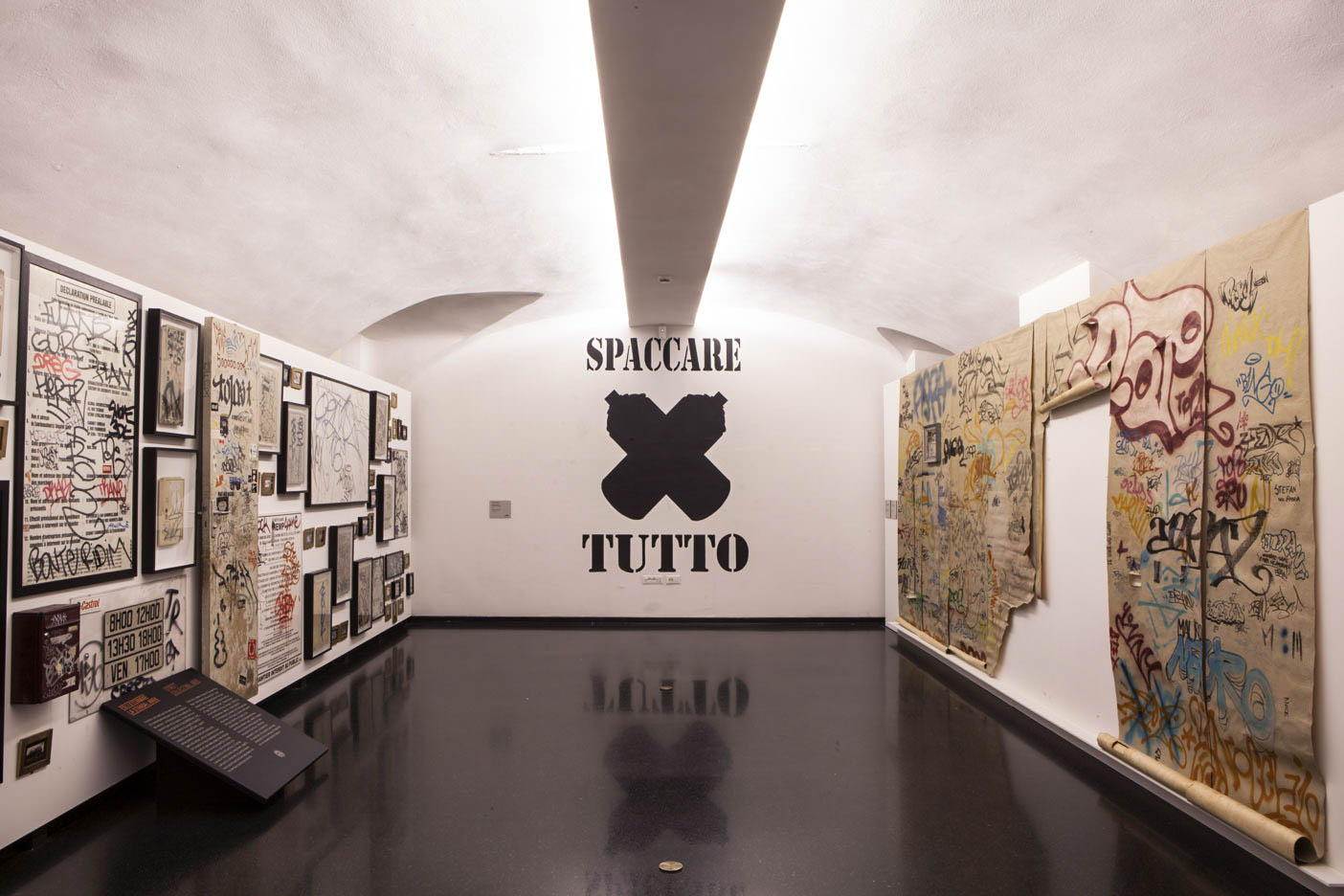
To make this position explicit, I asked Cuoghi and Corsello to paint their Spaccare tutto (“Destroy everything”) logo directly inside one of the exhibition spaces. The gesture was neither spectacular nor confrontational. It simply acknowledged that conflict is not external to these practices, but part of their internal logic—even within the museum.
From Global Narratives to Local Histories
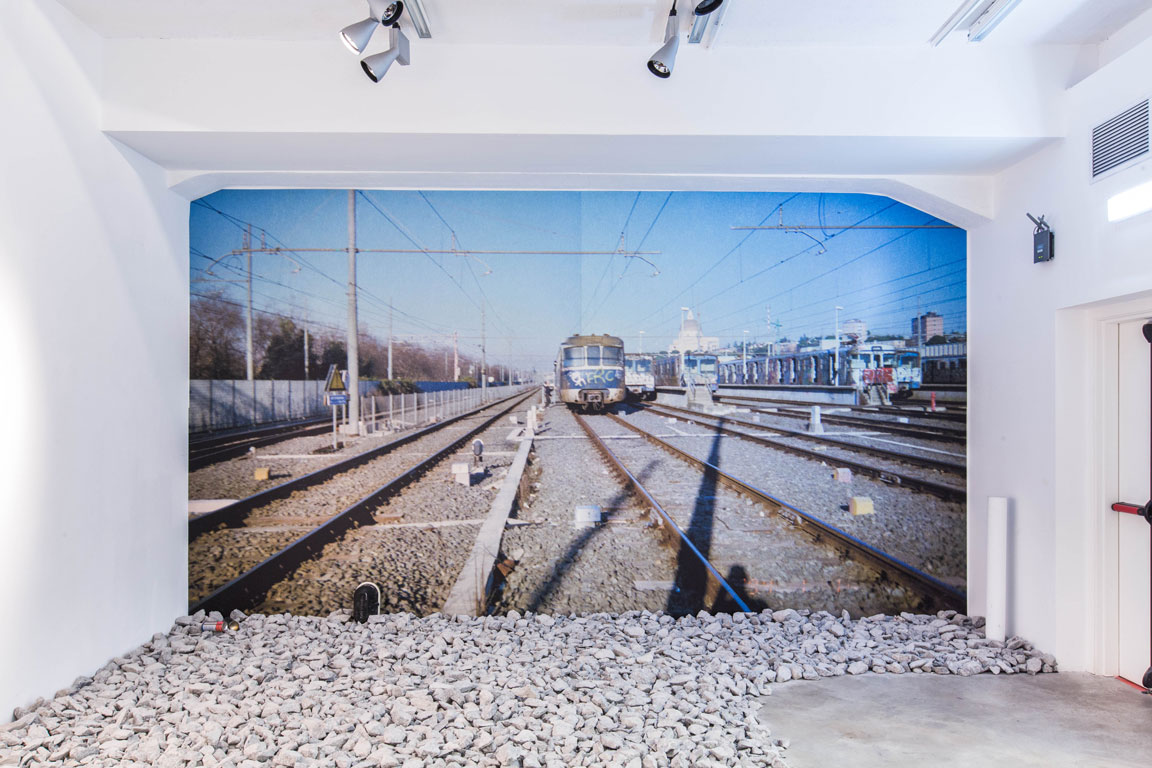
With Cross the Streets in Rome in 2017, the research shifted once again. The challenge was no longer just to show works or objects, but to tell the complex local history of a city often described as the Mecca of European graffiti.
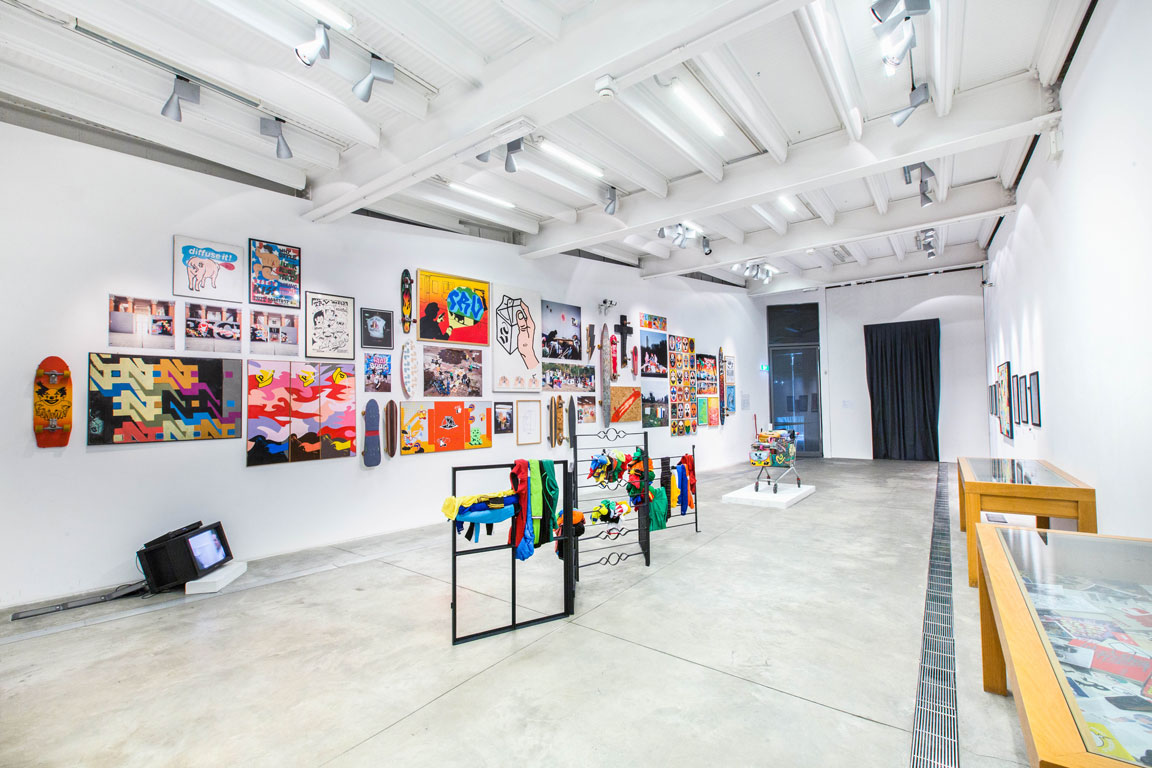
The goal was neither to produce an exhaustive overview nor to construct a heroic narrative, but to restore a specific cultural dynamic rooted in a precise territory, with its contradictions, its driving forces, and its blind spots. Once again, the exhibition functioned as a reading device rather than a reassuring conclusion, bringing together different types of material—paintings, installations, murals, sketches, archival documents, photographs, and video works—within a single narrative framework.
Archiving Before Myth Takes Over
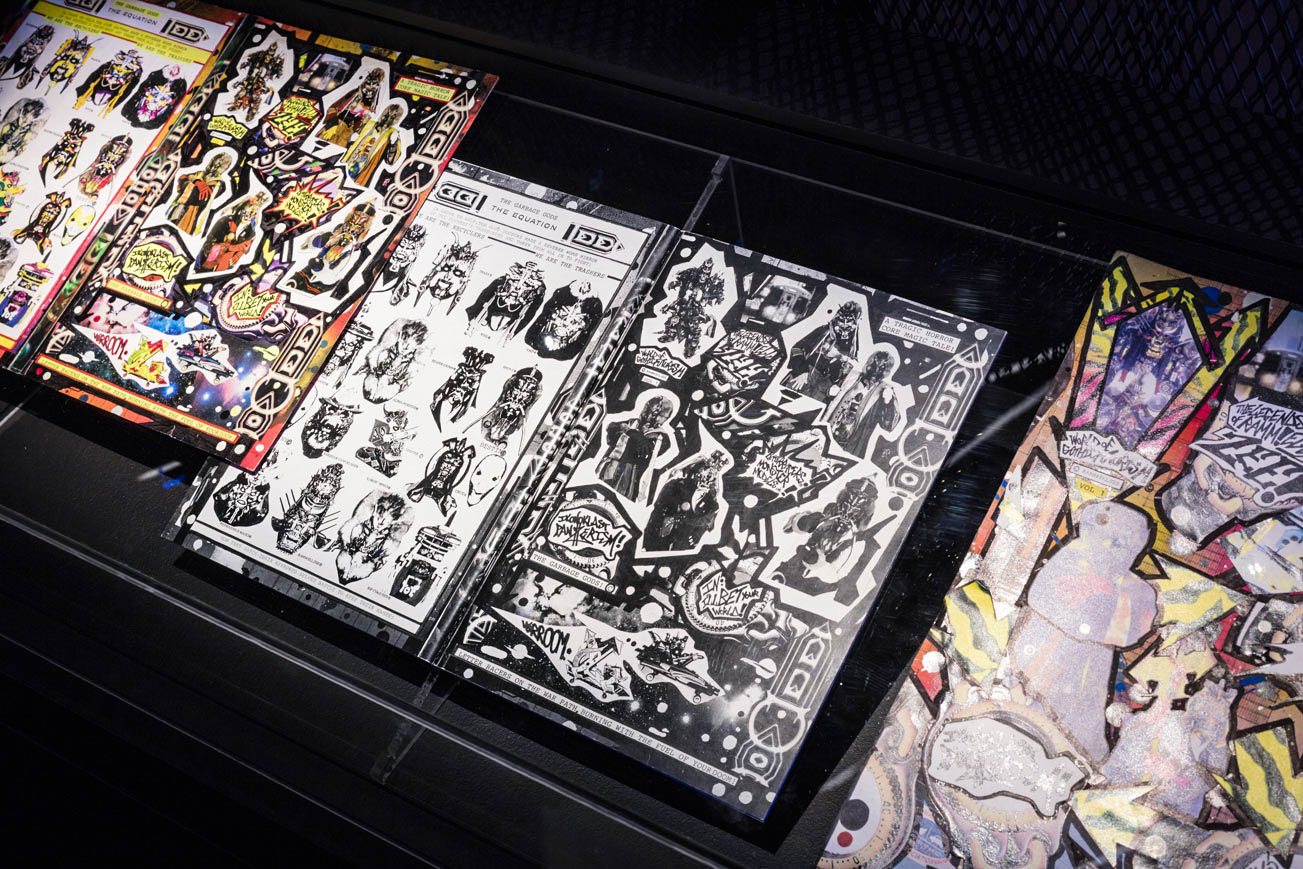
In 2018, Racing for Thunder, the exhibition devoted to RAMMΣLLZΣΣ (1960-2010), at Red Bull Arts in New York raised a different but related issue: the urgency of archival work.
RAMMΣLLZΣΣ’s production was vast, fragmented, deeply theoretical, and already drifting toward mythologization. Before thinking about exhibition design, it was necessary to establish a reliable foundation through extensive archival research. Alongside Max Wolf, Jeff Mao, and Candice Strongwater, my role focused on gathering, contextualizing, and verifying materials that were at risk of being simplified or misrepresented.
In this case, the exhibition—and its accompanying catalogue—served as tools of historical stabilization, without attempting to fix or close a body of work that inherently resists such closure.
Questioning What Seems Obvious
With Fire on Fire in Nancy in 2019, another recurring assumption was addressed: the idea that graffiti can be fully explained through its relationship with hip-hop culture.
Rather than denying this connection, the exhibition sought to complicate it by tracing broader circulations between urban art, music, performance, and visual cultures. The objective was not to replace one narrative with another, but to reopen questions that had become overly familiar.
When the Exhibition Reaches Its Limits
Loading: Street Art in the Digital Age, presented at the Grand Palais Immersif in 2023–2024, brought many of these questions together. Conceived as the first immersive exhibition dedicated to urban art, the project deliberately engaged with a format widely embraced by the general public, while also subjecting it to critical scrutiny.
Rather than rejecting immersion as a superficial or spectacular tool, Loading treated it as a powerful instrument for dissemination—provided it is used with methodological rigor. Questions of narrative construction, exhibition formats, objects, institutions, and audiences converged within a single project, making visible both the possibilities and the limits of immersive display.
In that sense, Loading functioned less as a conclusion than as a saturation point. Continuing in the same direction would have meant repeating a model that had already produced what it could. The limits of the exhibition format became clear—not as a failure, but as a structural boundary that made it necessary to imagine other ways of carrying this research forward.
Continuing Differently
Gradually, it became evident that exhibitions alone could not carry this work forward. The research they generated needed other forms to persist: books, archives, editorial projects, and slower, more durable formats capable of sustaining complexity over time.
Exhibitions were never the goal. They were one phase in a broader process of inquiry. Le Grand Jeu emerged from this realization—as a structure designed to hold what exhibitions could reveal but not retain.
What began as a series of curatorial experiments has since evolved into a long-term platform for research, transmission, and shared resources. And it continues to develop, not by replacing exhibitions, but by situating them within a wider ecology of knowledge.
Part of an ongoing series
This article is part of a series reflecting on how Le Grand Jeu took shape through books, archives, and exhibitions.
– 2. Books Before the Bookshop
– 3. From Archives to Shelves
Filed under: On Display