Herbby grew up between Guadeloupe and France, where style, identity and cultural objects shaped his view of the world. In this conversation he reflects on why telling one’s story, from one’s own origin, matters as much as the objects that carry it.
Le Grand Jeu: When did you feel the need to tell your story from your own starting point, rather than through already existing frameworks?
Herbby: The idea of writing a book has been with me for a long time. I grew up with writing and reading thanks to my mom, so it was always there, somewhere in the back of my mind. But for me, it felt like an almost impossible project: too much work, too colossal, and above all, I hadn’t yet found the right theme.
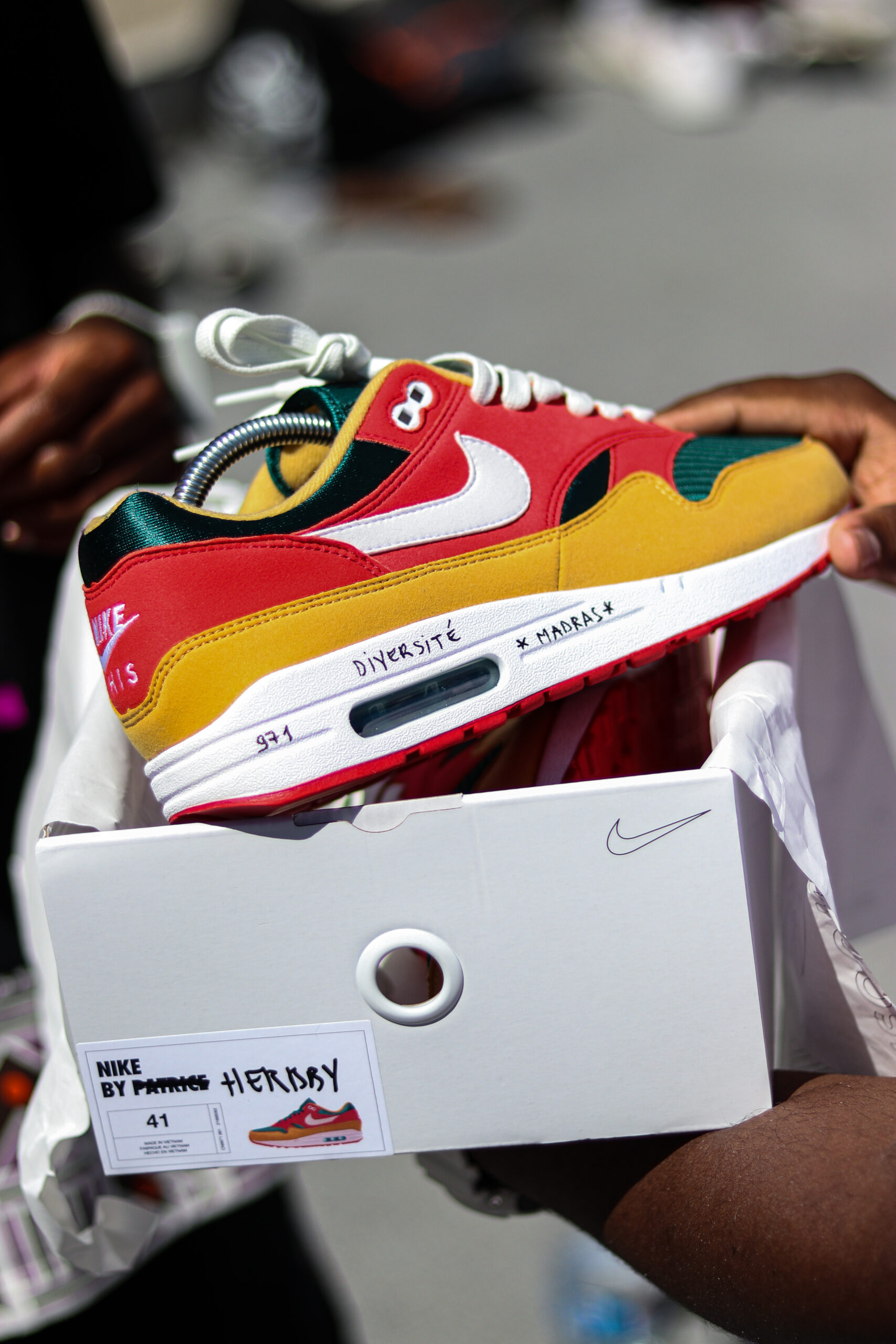
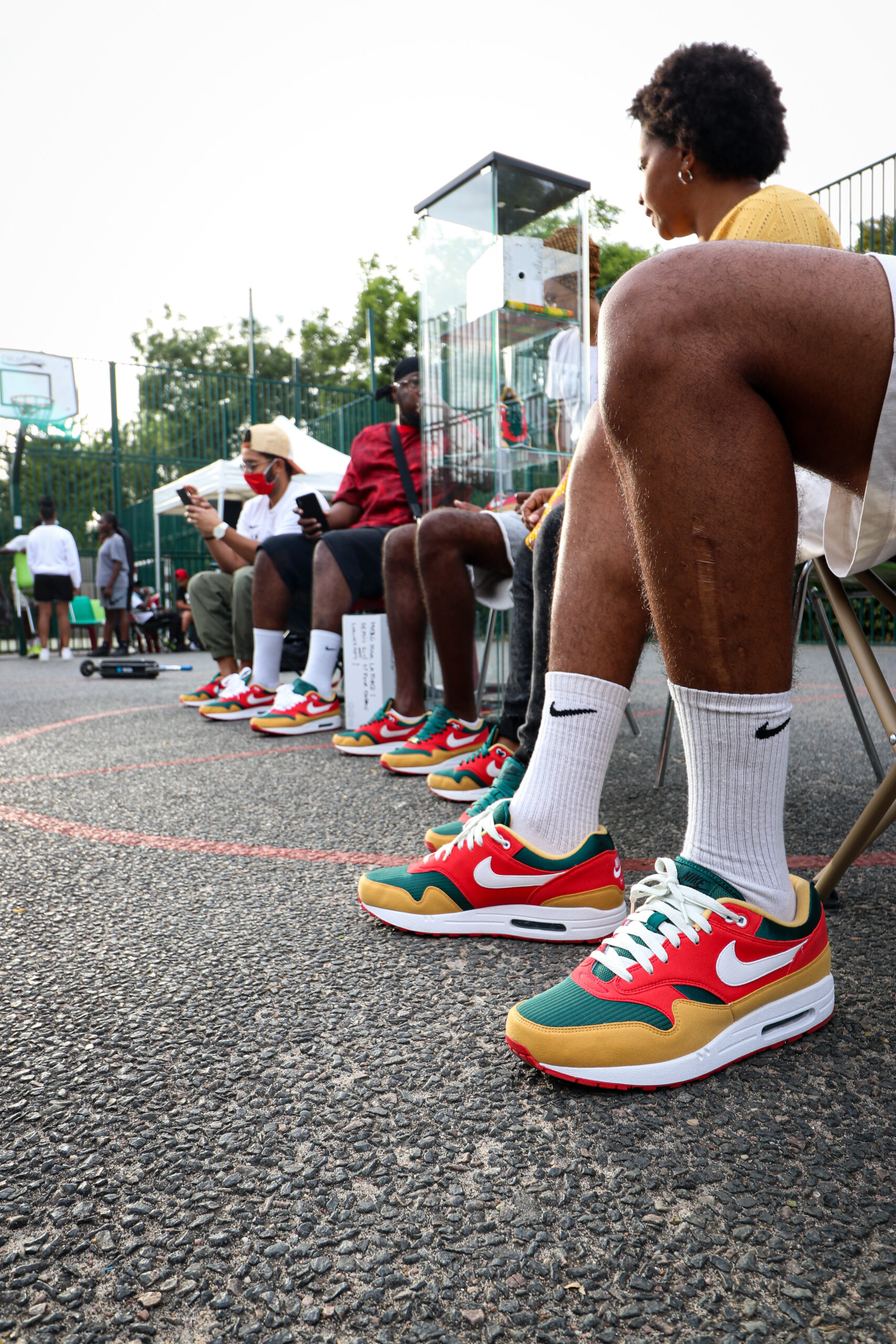
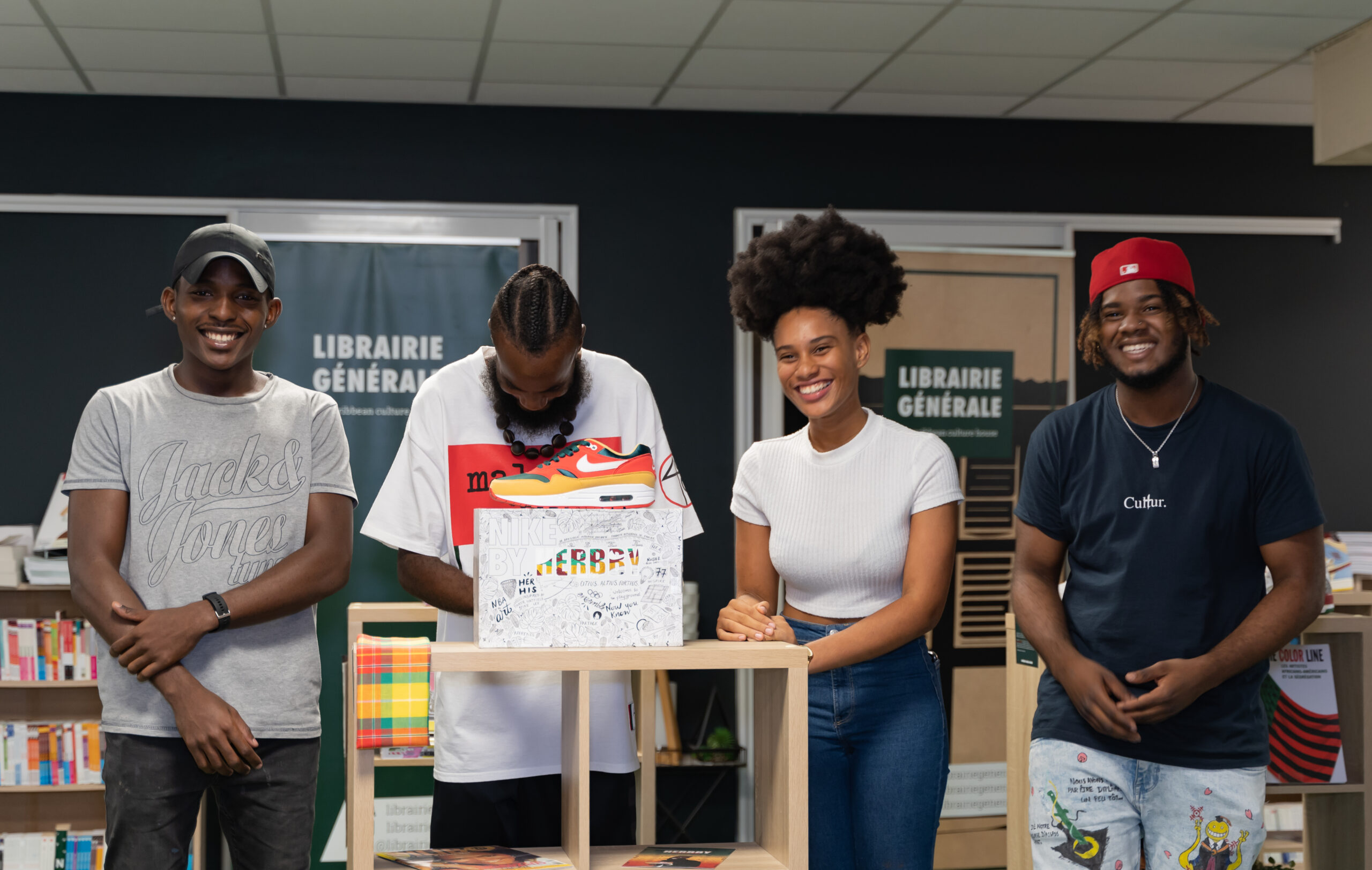
The real trigger came in 2020, with the creation of the Air Max 1 By You « Culture & Diversity » with Nike. The project worked, it resonated. Then, in 2021, I organized my first « Culture & Diversity 97.1 » festival in Guadeloupe, and the feedback was very strong, especially from parents who told me I was a role model for the local youth.
That’s what really motivated me to start writing Culture & Diversity: a tribute to my Caribbean homeland. And to answer the question, it was essential for me to tell part of my story from my own starting point because what inspires me in any work is authenticity and uniqueness.
LGJ: How has your place of origin shaped your view of clothing and sneakers?
Herbby: Guadeloupe is a very sunny, colorful, dynamic, and joyful place. Style, clothing, even the way of life—all of it is interconnected. Personally, it really helped me build my own visual identity and personality.
There, you realize that clothes, shoes, and sneakers are true extensions of identity. No matter the means or standard of living, they are not just pieces we wear—they are part of who we are, helping us to be unique and distinctive.
LGJ: As a child, did these items already hold special meaning for you, or did that develop over time?
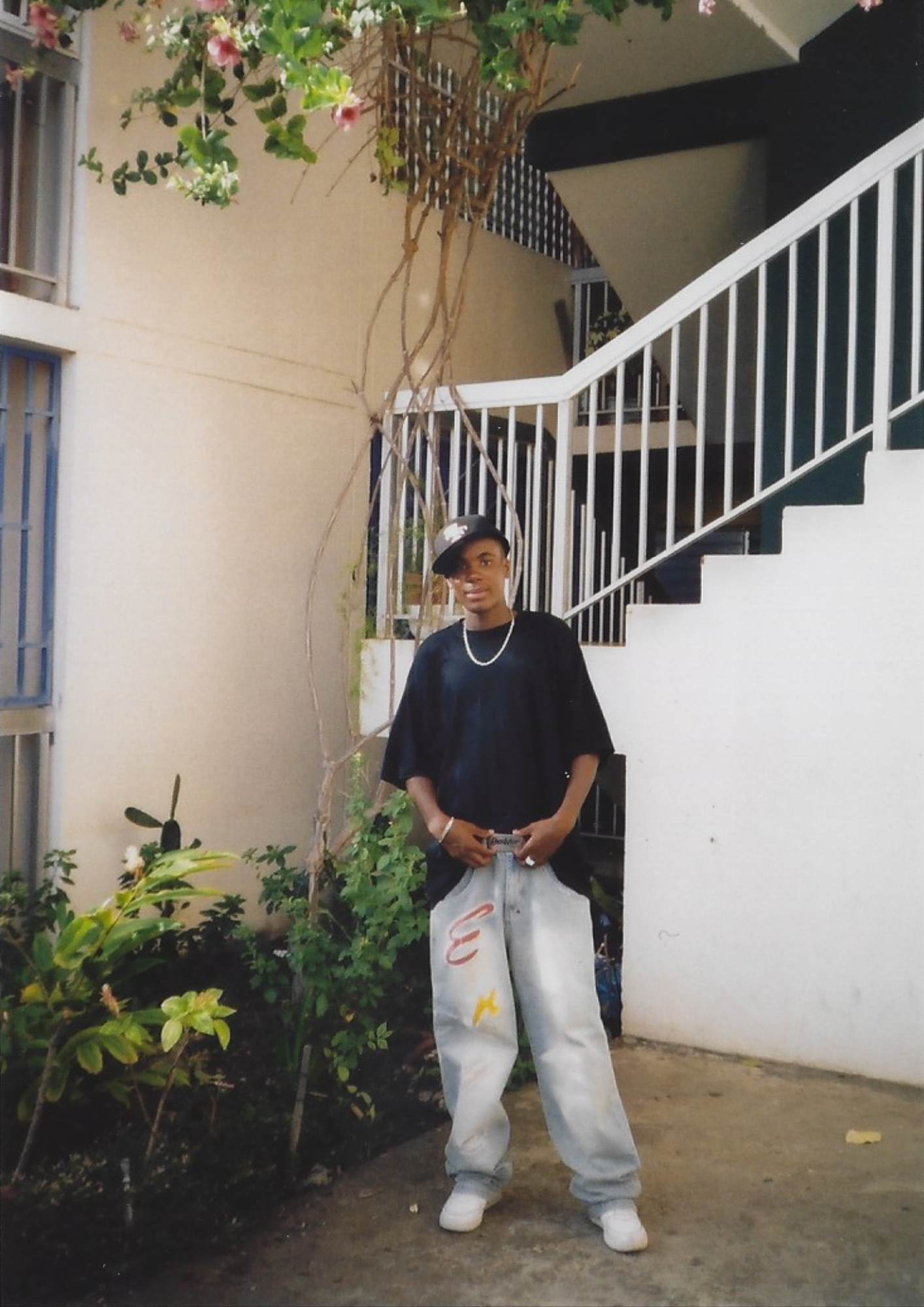
Herbby: Clearly, since I was little, I’ve always had this attachment to clothing. My mom always dressed very well, as did my uncles and aunts in Guadeloupe: lots of color, lots of care, everyone with their own style. Naturally, it rubs off.
Sneakers came a bit later. Initially, I was very into football, and in 1997, when Space Jam came out with Michael Jordan and the Looney Tunes, I gradually shifted towards basketball. From the age of 8, I started paying attention to NBA players’ sneakers, and I really got into it in the early 2000s.
Clothing was already there before that, even without shopping at age 8. Even today, when I look at family photo albums, I see pieces I loved to wear, my mother’s looks that left a mark. It started very early—it’s part of me.
LGJ: Why do you think sneakers have become a universal language, able to travel across cultures, territories, and generations?
Herbby: Sneakers have become a universal language simply because most people wear them every day—whether for sports or just to go buy bread. They are very accessible and present in our lives.
Then, there was a huge effort by enthusiasts to elevate sneakers from a subculture to a true culture. After that, we moved from enthusiasts to entrepreneurs, designers, resellers, distributors, and so on. All of this collective work, at different levels, has highlighted the universal nature of sneakers, regardless of culture, territory, or generation.
LGJ: What about the Air Max 1 still speaks to you today—beyond its design or performance?
Herbby: To be completely honest, I wasn’t originally a huge fan of the Air Max 1. I like the model, but as a sneaker and basketball enthusiast, it wasn’t the one that fit my style the most. Yet it remains an undisputed icon.
What really speaks to me in the Air Max 1, beyond design and performance, is its universality. Its design was inspired by the Centre Pompidou in Paris, and it has since transcended borders and generations.
It’s truly this unifying and universal aspect of the Air Max 1 that still resonates with me today.
LGJ: Is there a pair that tells a specific story from your journey, almost like a personal archive?
Herbby: To avoid talking about my Air Max 1 By You « Culture & Diversity »—which would have been the obvious and slightly cliché answer—there is another very important pair for me: the Air Force 1.
It’s really the model I grew up with as a Guadeloupean, West Indian, Afro-Caribbean. Originally released in 1982 for basketball, it has always been a reference for me.
I’m also a big hip-hop fan, especially of DJ Clark Kent, the late Brooklyn-based producer who notably worked with Jay-Z and The Notorious B.I.G.
Between 2013 and 2017, I worked with Nike and Jordan. At one point, I managed the Jordan basketball section at the Champs-Élysées store, organizing weekly events for major sneaker releases.
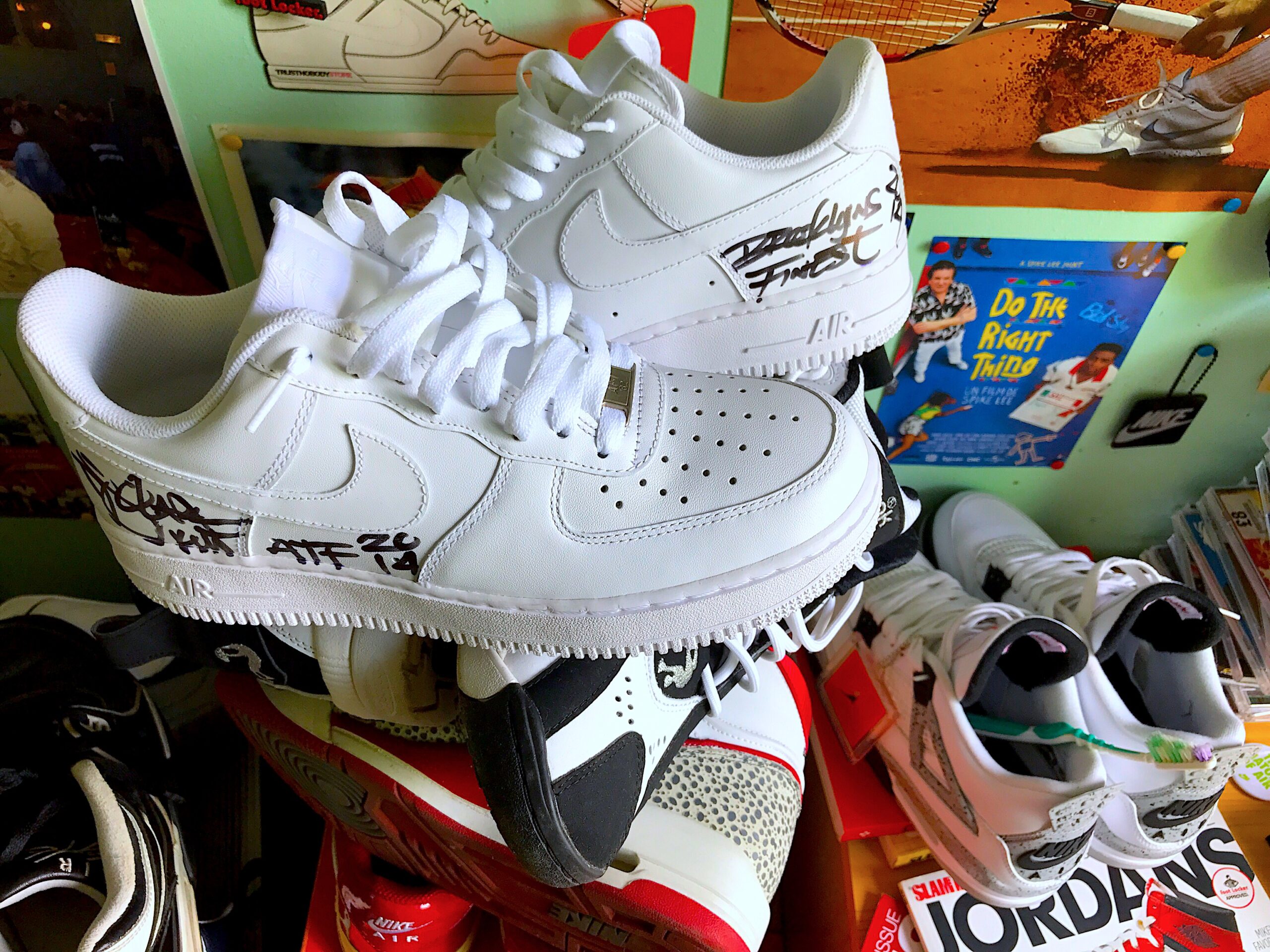
During Black Friday 2014, DJ Clark Kent visited Paris and agreed to attend our event. The day before, I bought an Air Force 1 for him to sign, along with Jay-Z’s first album. Why the Air Force 1? Because he was one of the world’s biggest Air Force 1 collectors and greatly contributed to popularizing the model internationally.
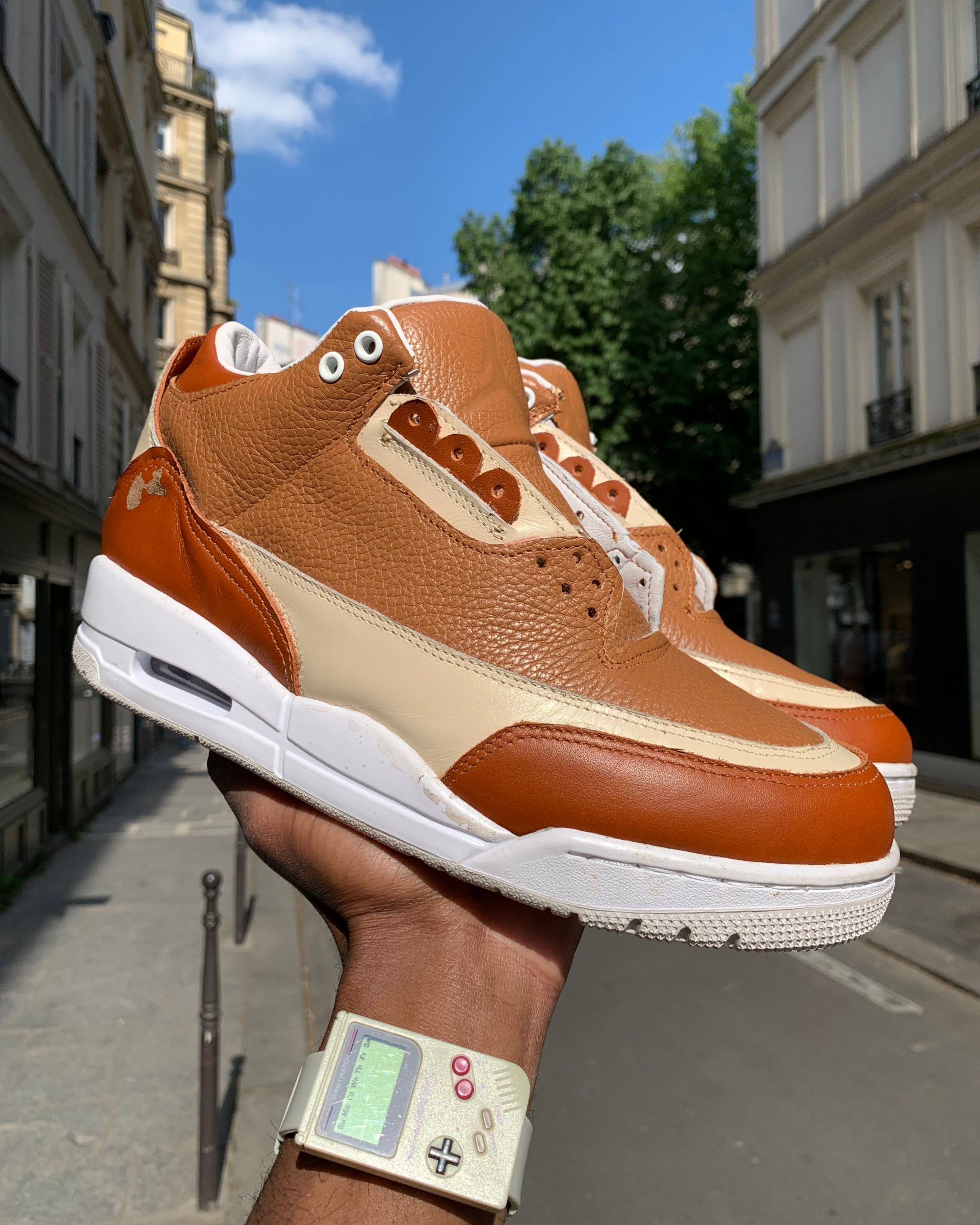
Today, this all-white Air Force 1 Low is displayed at my home as a work of art, and sometimes I show it at my exhibitions. It’s a true personal archive.
LGJ: You explicitly reference Pan-Africanism in your work. How does it help you think about culture, autonomy, and the circulation of imagination, especially through objects like clothing or sneakers?
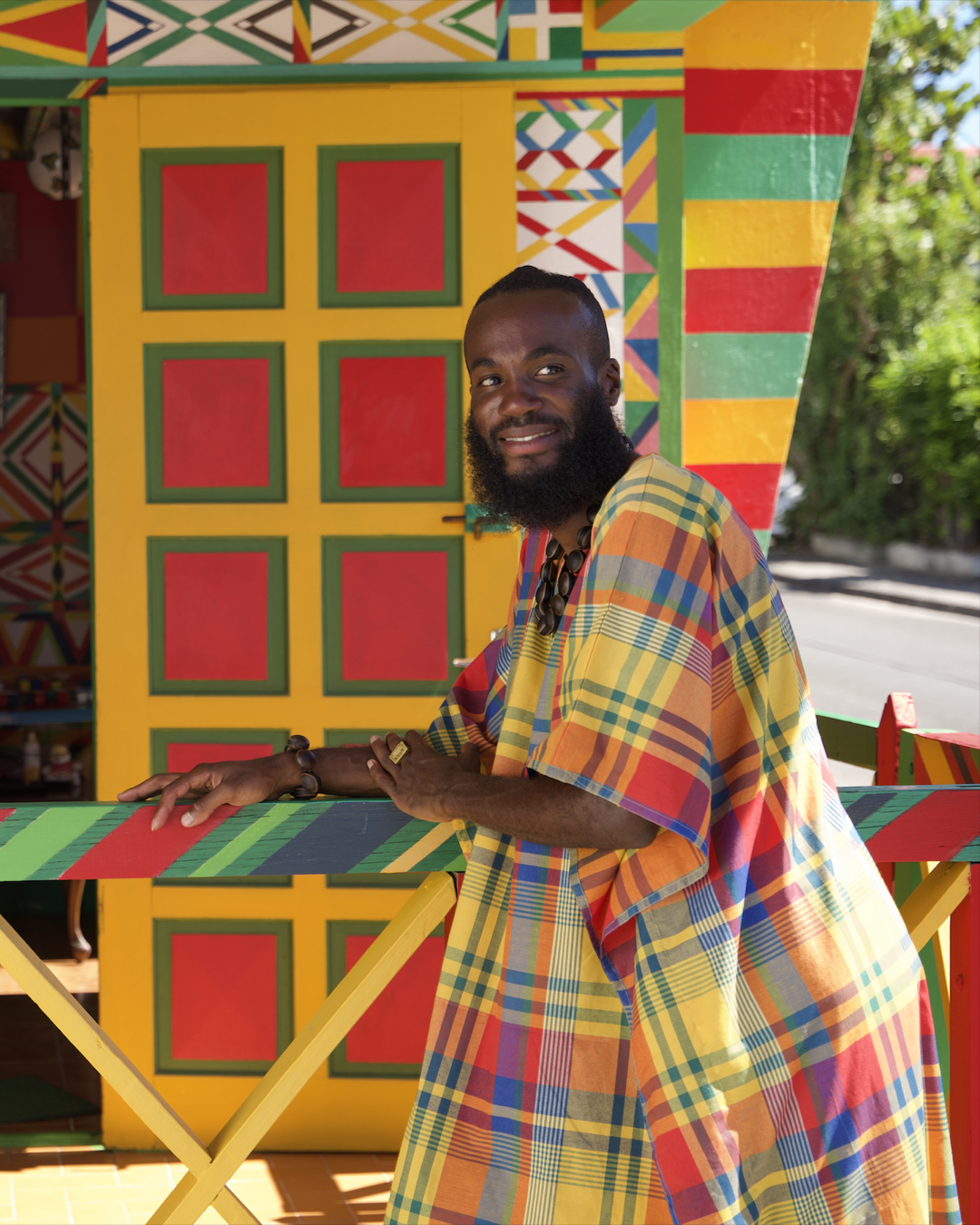
Herbby: For me, Pan-Africanism first of all allows me to be myself daily, proud of who I am, where I come from, my history, culture, and heritage. Clothing and style are extensions of my personality and identity.
The Pan-African movement allows me to express this freely, calmly, and proudly. It’s not theoretical or calculated—I don’t wake up in the morning thinking, “I am Pan-African.” It’s just my everyday life. Coming from Guadeloupe, there’s also the matter of West Indians not always recognizing themselves as descendants of Africans, when in fact we are. For me, it’s important to say it, highlight it, and claim it proudly.
Pan-Africanism also lets me tell my story from my own perspective, not just through a European lens. Even though I’ve lived in mainland France, I carry my full Guadeloupean, West Indian, Afro-Caribbean, African-descendant heritage. It’s important for me to express it with my own words, vision, and commitments. In that sense, yes, it clearly aligns with the idea of decolonizing thought and writing, especially in the context of a book, with a unique vision rooted in Africa and born in Guadeloupe.
LGJ: Do you think creating, producing, and distributing cultural objects can be a way to influence representations and, in a way, reclaim narratives?
Herbby: Yes, absolutely. Creating, producing, and distributing cultural objects allows you to reclaim narratives. It also allows you to adjust narratives that have long been distorted or told only from a European, often colonial, perspective.
Today, these objects become sources of truth, light, and inspiration. I think it’s crucial that everyone contributes in their own way, especially through books. For me, the book is essential—it passes from generation to generation, enabling growth and education. So yes, it’s clearly a vector for change, reclamation, and elevation.
LGJ: Do you see participating in the evolution of fashion and urban cultures as a form of activism, even when it manifests through aesthetic or commercial gestures?
Herbby: Yes, it can be, but not necessarily in a strict sense. Some do it purely for creative reasons, and that’s great because the most important thing is expression, whether one is activist or not.
Others do it with the desire to share messages, claim truths, or make visible what’s often hidden. What drives me most is the ability to create, to participate in the evolution of these movements, beyond activism alone.
LGJ: You quote Marcus Garvey at the start of the “Culture” chapter of your book. What does his thought bring you today, and how does it continue to inform your vision of the link between culture, identity, and emancipation?
Herbby: It was very important for me to open this chapter with a quote from Marcus Garvey. I’m inspired by quotes, and this one has spoken to me for a long time. I’ve shared it often because I find it both very personal and entirely universal.
His thought reinforces the idea that we are never better off elsewhere than at home. By “home,” I mean first of all our own, culturally, but also being with people who share a similar vision of the world.
Whenever I return to Guadeloupe, as soon as I step out of the airport and feel the local warmth, that’s already enough for me. Being on my land, seeing family—it’s very powerful.
Ultimately, once you know who you are, you move forward more easily, you embrace yourself, you assert yourself. For me, that’s the foundation of a healthy way of life.
LGJ: What does Guadeloupe say about contemporary creativity, far from the usual clichés?
Herbby: I don’t claim to speak for Guadeloupe, but I know that it contributes strongly to contemporary creativity in many fields. Music gets a lot of attention, but Guadeloupe is also very present in cuisine, agriculture, art, and creativity more broadly.
The people of the archipelago want and need to be recognized for more than just music, beyond a single genre like zouk. This isn’t a militant discourse—it’s just reality.
It’s a real land of creativity; it just needs more support and visibility.
LGJ: How do you see cultural and urban scenes evolving there, especially among young generations?
Herbby: What’s striking today is that young generations are taking much more ownership of their culture, heritage, and history. They’re less afraid to revisit these elements than previous generations.
These scenes aren’t evolving in the future—they’re evolving right now. They are more dynamic, more open, and more connected, with Creole, English, and Spanish influences.
There’s also a real reconnection with other Caribbean territories, like Puerto Rico or the Dominican Republic. The entire Caribbean scene is becoming more culturally linked, giving it much more strength than before.
LGJ: When working on these topics, do you see yourself more as someone opening spaces, or someone passing down stories that already exist?
Herbby: Even if it may sound a bit pretentious, I see myself more as someone opening spaces. I don’t see my book as a simple publication, but as a true collector’s piece. I invested as much in the artistic and visual side as in the cultural, historical, and engaged side.
Some still reduce the project to sneakers, while the book is much broader than that. The polarity in feedback actually proves that I opened a space with this book.
With hindsight, many people perceive and appreciate the link between art and culture in my work—not just through the book, but also through events, magazines, exhibitions, and collaborations.
So yes, honestly, I believe I create spaces. And even if it may sound pretentious, I think it’s pretty close to reality.
LGJ: Do you feel your work has helped shift, even slightly, the perception of Caribbean cultures?
Herbby: To answer this simply, I’ll just read a comment I received during the book crowdfunding at the end of 2024, to finance its creation, self-publishing, and promotion.
It was from a contributor I didn’t know at all. He wrote:
“Hi Herbby, I received the book. Thanks for the dedication. It’s a great work. I didn’t know much about Guadeloupean culture, but the values you share are the ones I appreciate. Can’t wait for my daughters to grow up to read it. See you.”
Just rereading this message gives me chills. I find it incredible that someone I didn’t know was interested in the project, contributed financially to make it happen, chose the reward with the book, and read it almost immediately after receiving it.
The fact that he knew nothing about Guadeloupe but managed to embrace the values highlighted in the book, appreciated them, and wants to pass them on to his daughters—that already shows a transmission happening.
So yes, to answer clearly, I think my work has helped, even slightly, shift the perception of Caribbean cultures. And for me, that’s already huge.
LGJ: Does the title of your book reflect, in your view, what sneakers have become today: an everyday object, full of stories, and profoundly global?
Herbby: Honestly, I had never thought about it that way, but I agree. The title reflects well what sneakers have become today: an everyday object, full of stories, and profoundly global. I think it’s well said.
Personally, as a “purist,” there are many things in the sneaker world that have bothered me in recent years. But in hindsight, I realize it’s simply the result of this movement becoming global, open to everyone, and therefore used by everyone.
What I’ve always loved about sneakers—I even say “sneakers” less and “baskets” more, it’s generational—is the stories. And that’s exactly where the link with the book comes in.
Ultimately, the book tells the story of a pair of sneakers: a personal story, full of anecdotes, an everyday object that is passed on, resonates, and reaches a global scale. And I hope above all that it will continue to inspire and be passed down from generation to generation.