For a while, it seemed impossible to escape Ukraine. The war occupied front pages, social media feeds and cultural conversations across Europe with an intensity that felt almost total. Artists travelled to Kyiv in solidarity. Murals appeared in Berlin, Paris and London. Fundraisers, exhibitions and benefit parties multiplied across underground scenes. Then, gradually, attention shifted elsewhere. Other conflicts emerged, other crises absorbed the media cycle, and Ukraine — while still at war — slowly disappeared from the emotional centre of European public life.
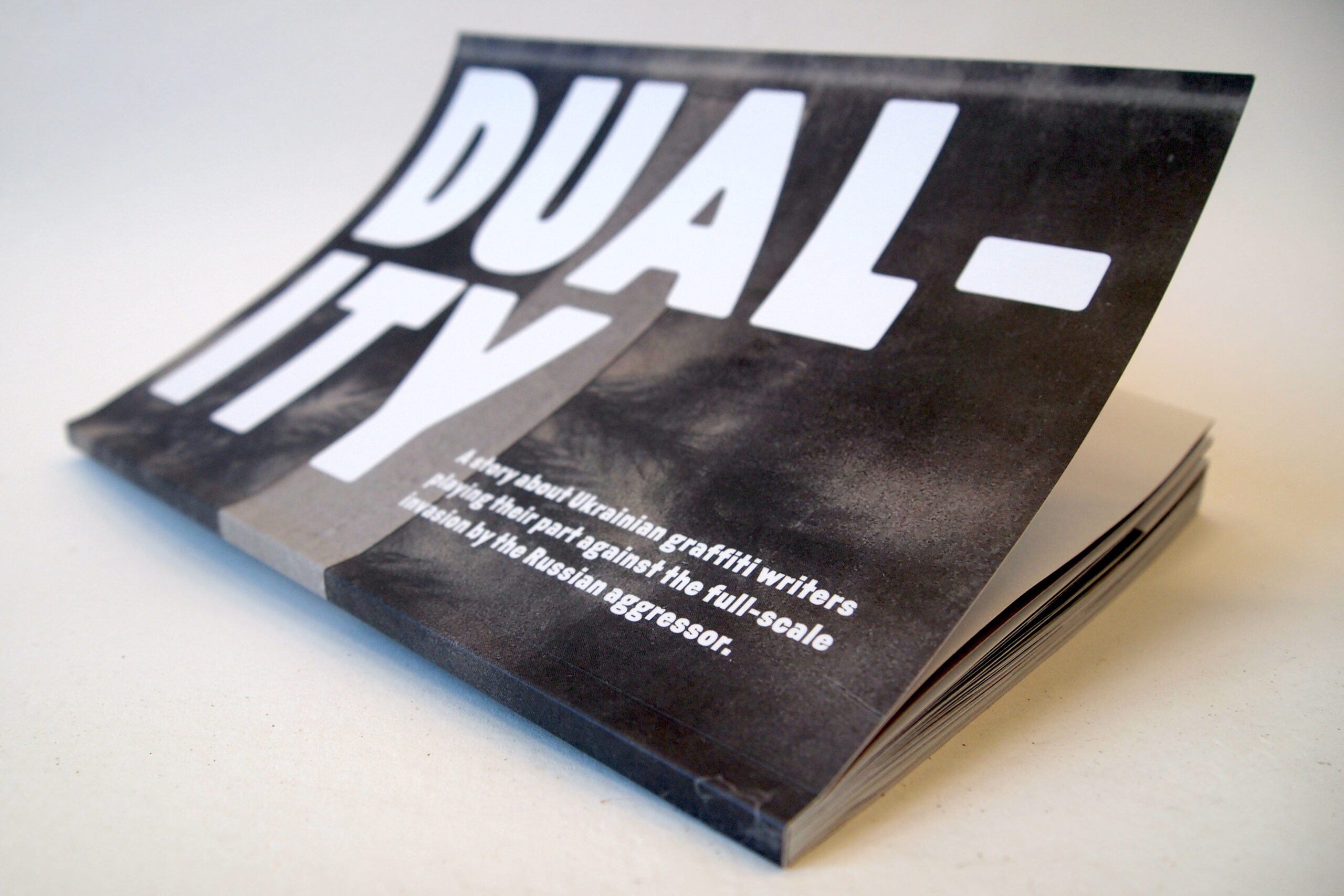
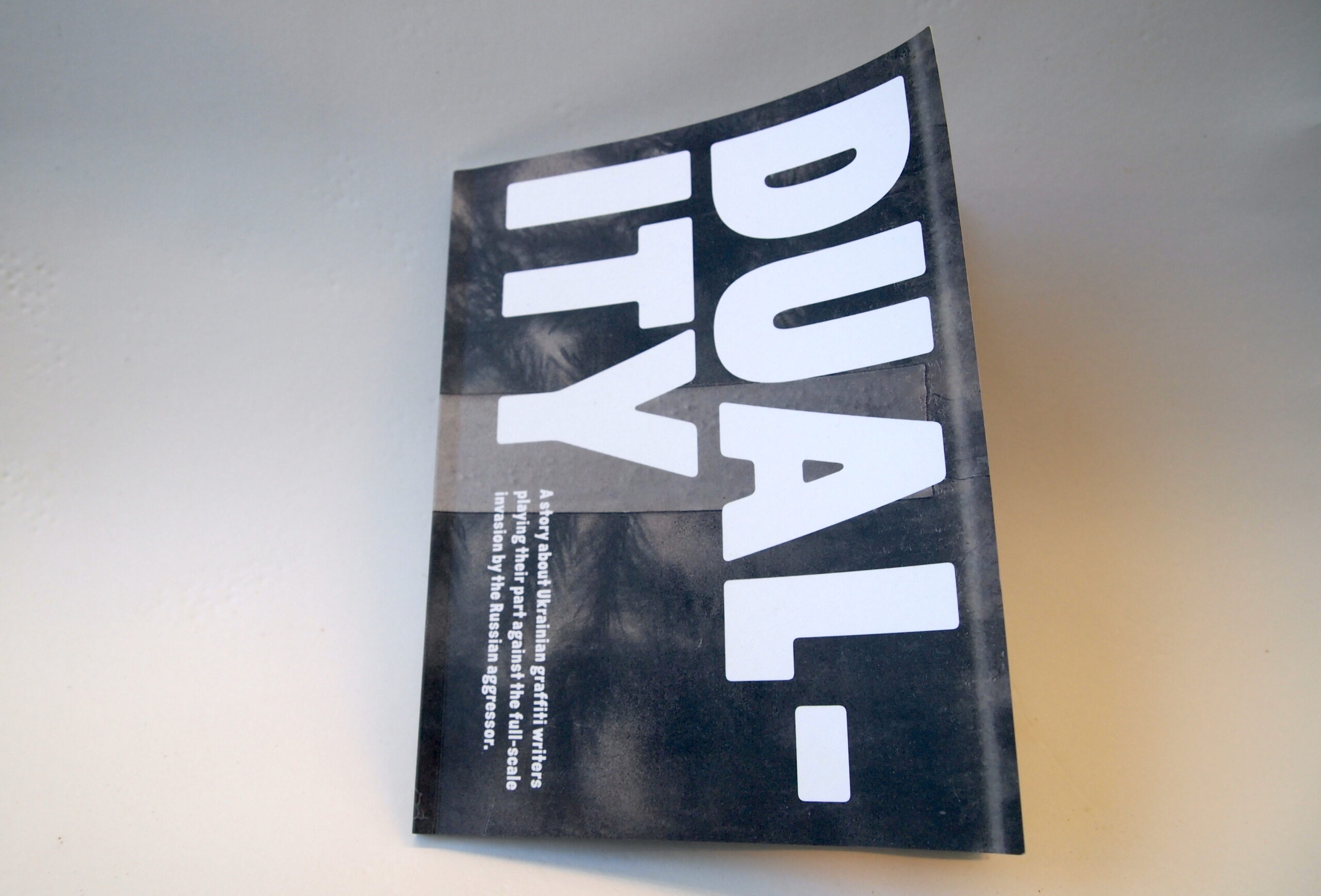
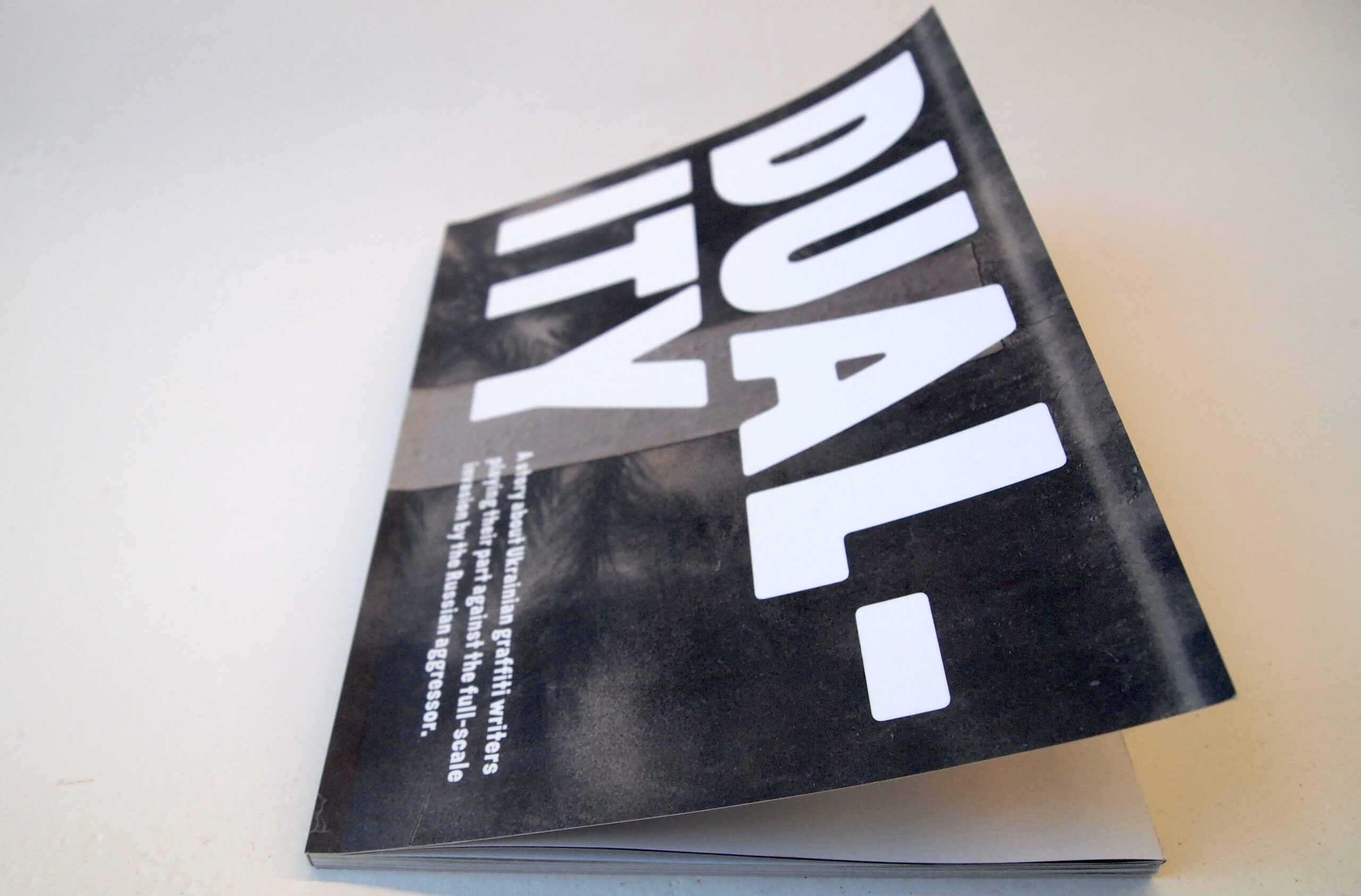
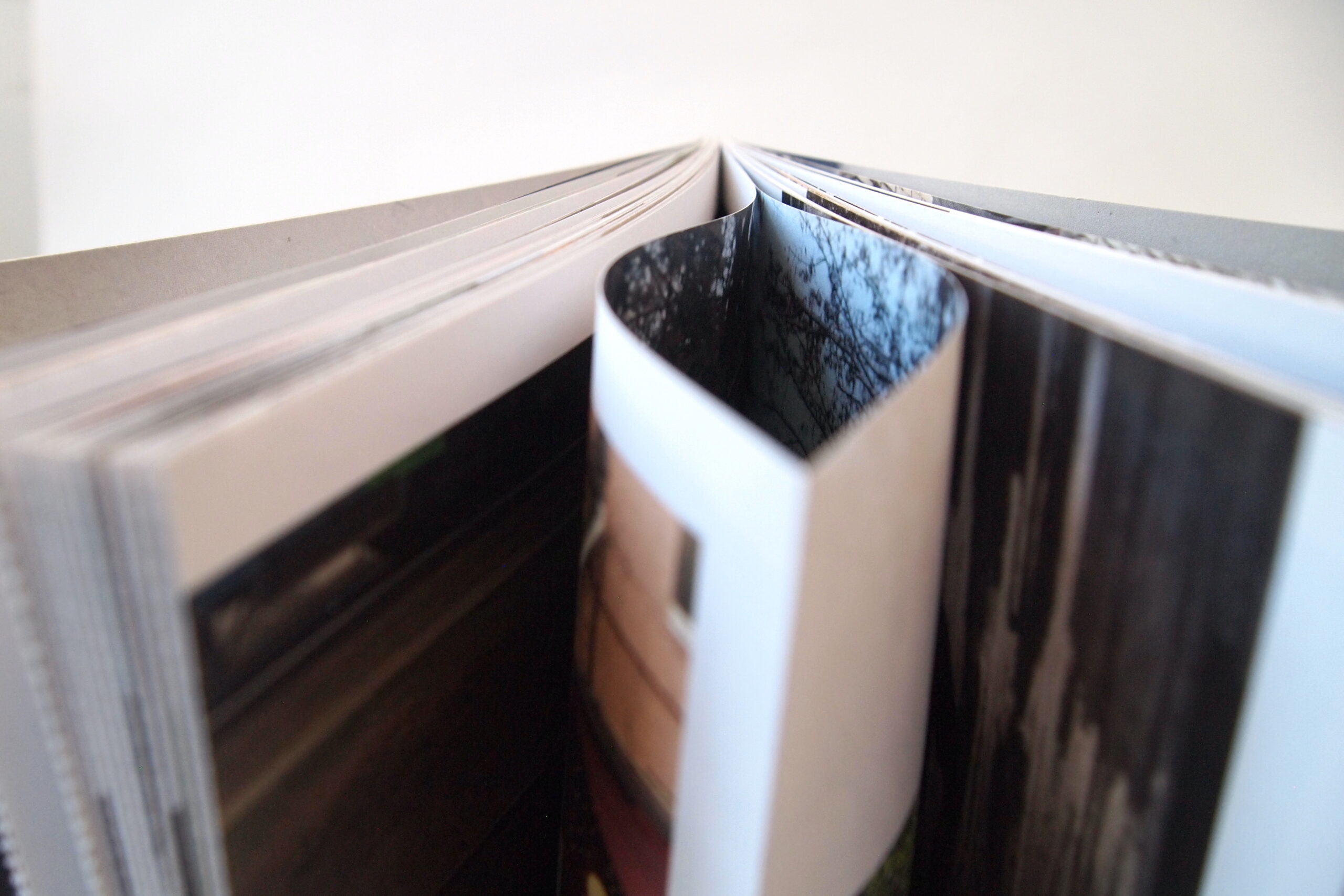
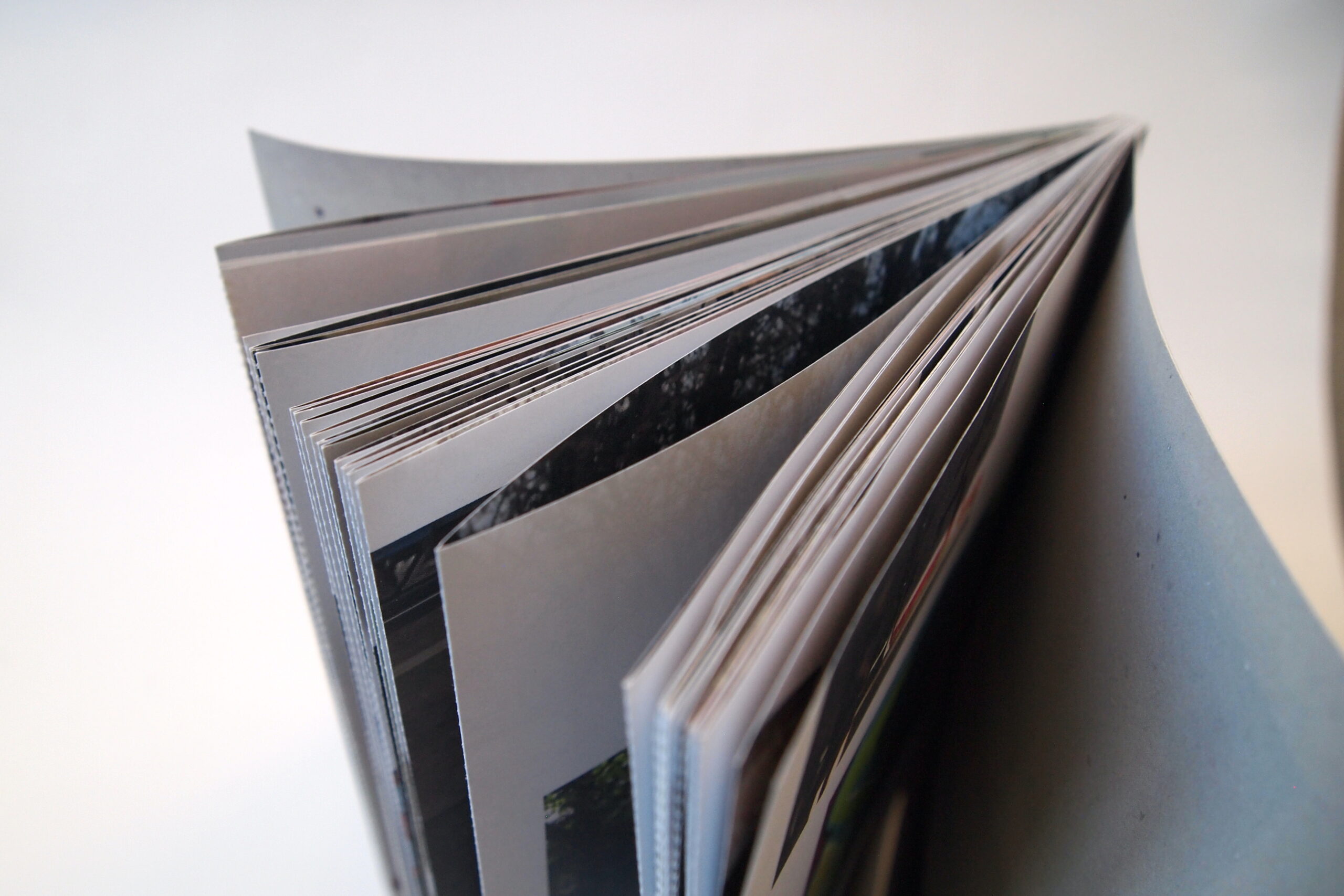
I first came across Duality almost by accident, through a small independently published book circulating quietly inside graffiti and underground publishing networks. At first glance, it looks closer to an experimental zine than to a traditional documentary publication: Japanese binding, fragmented layouts, folded pages concealing hidden images.
Yet behind its understated form lies one of the strangest and most revealing stories to emerge from Europe’s underground cultures since the beginning of the Russian invasion.
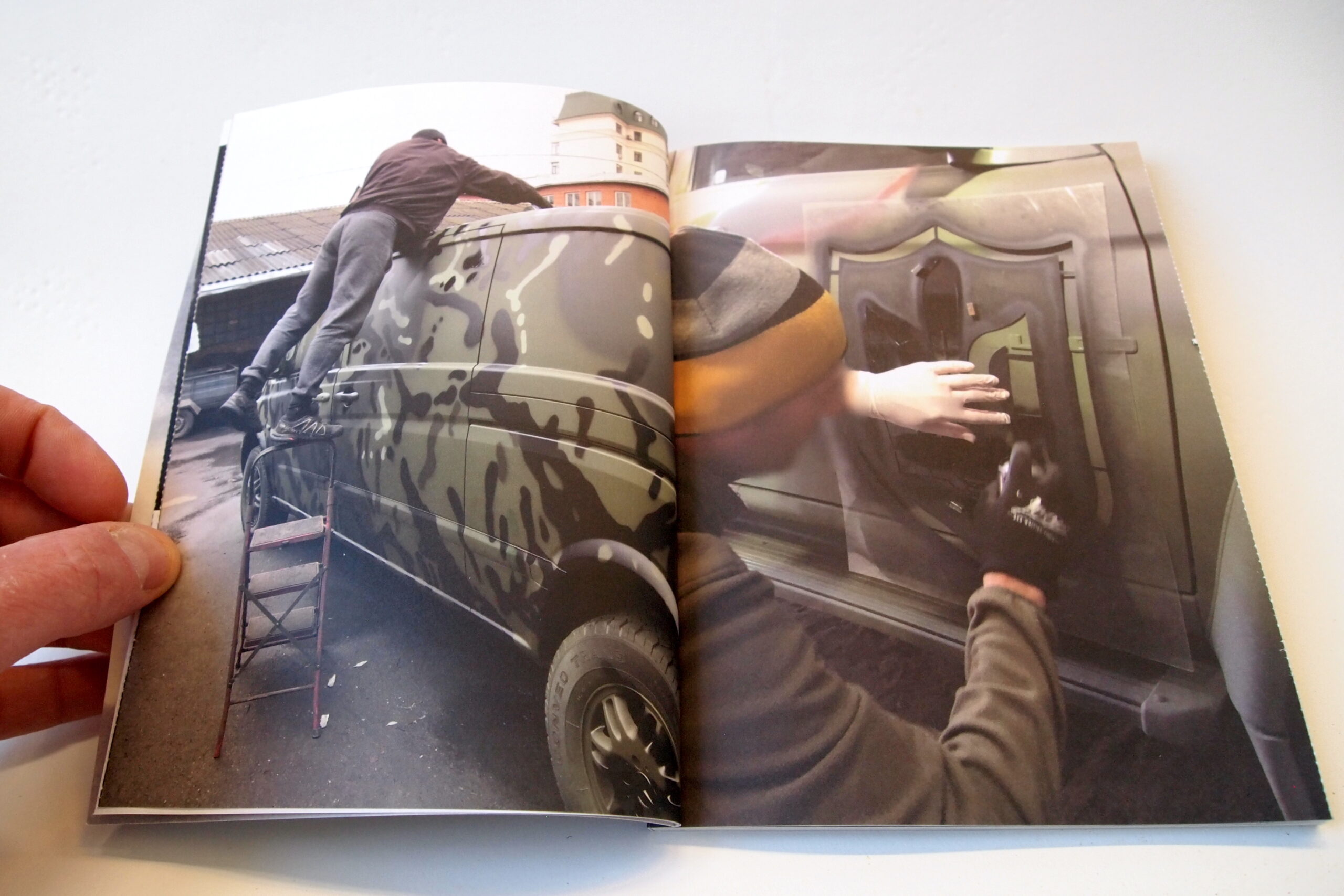
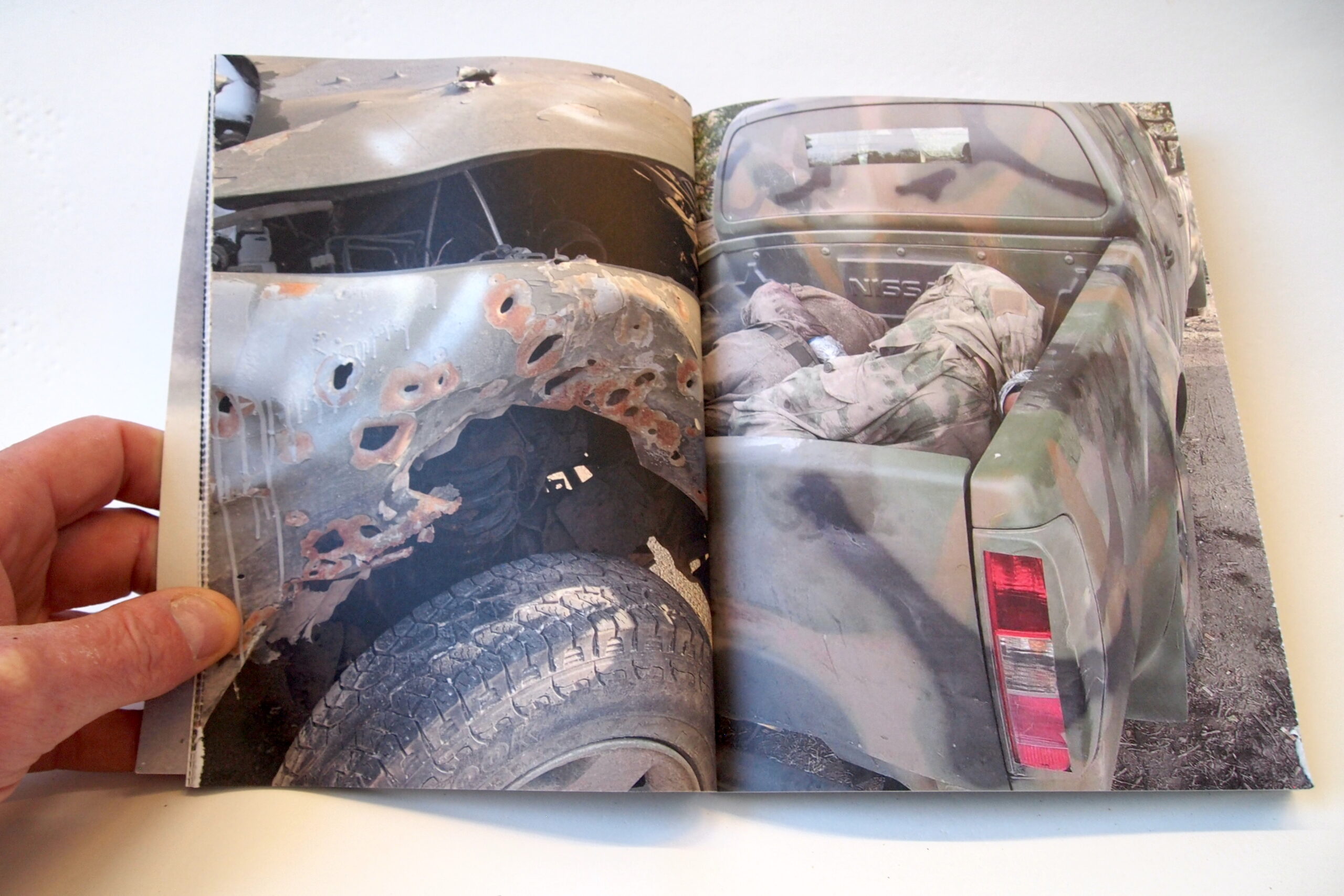
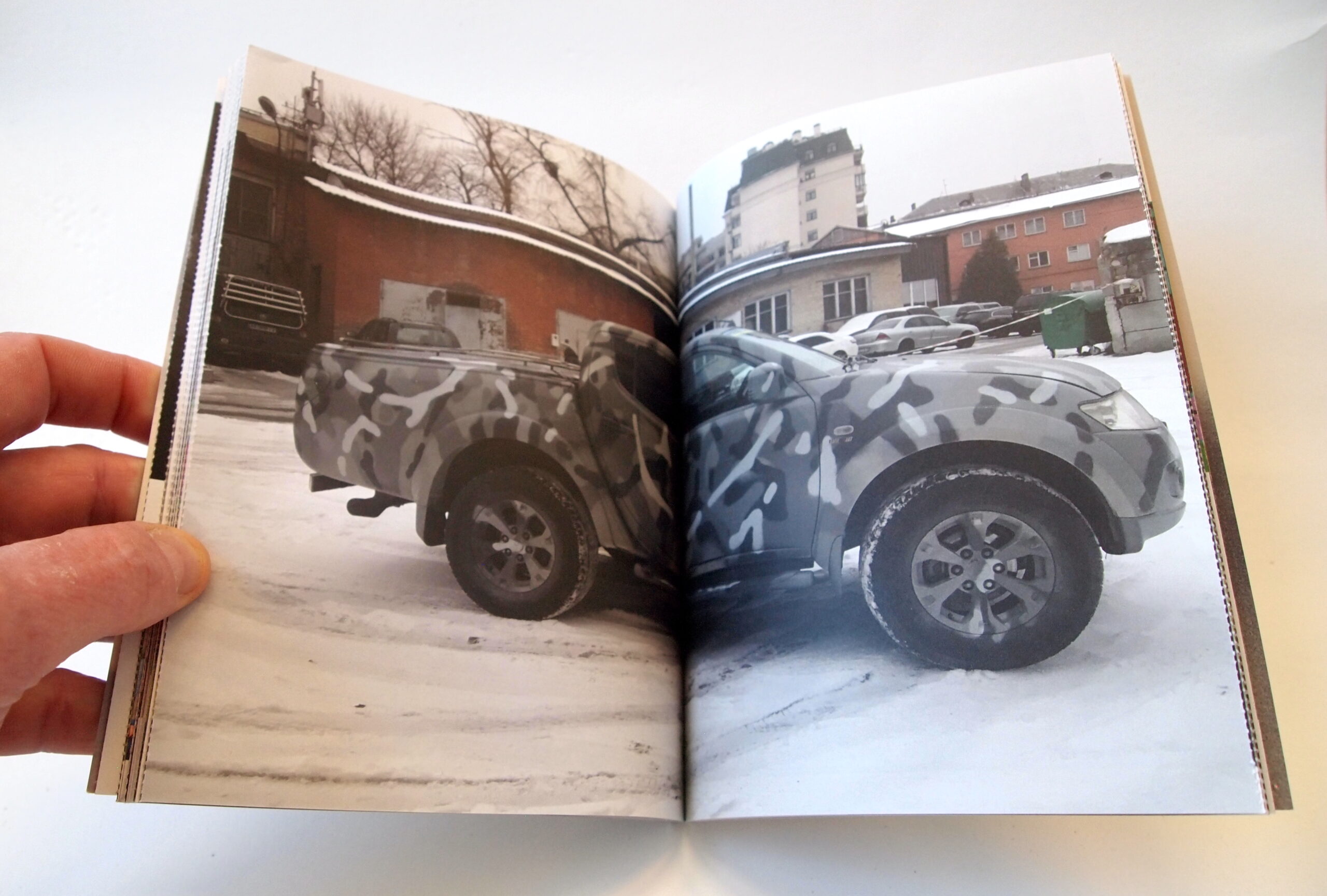
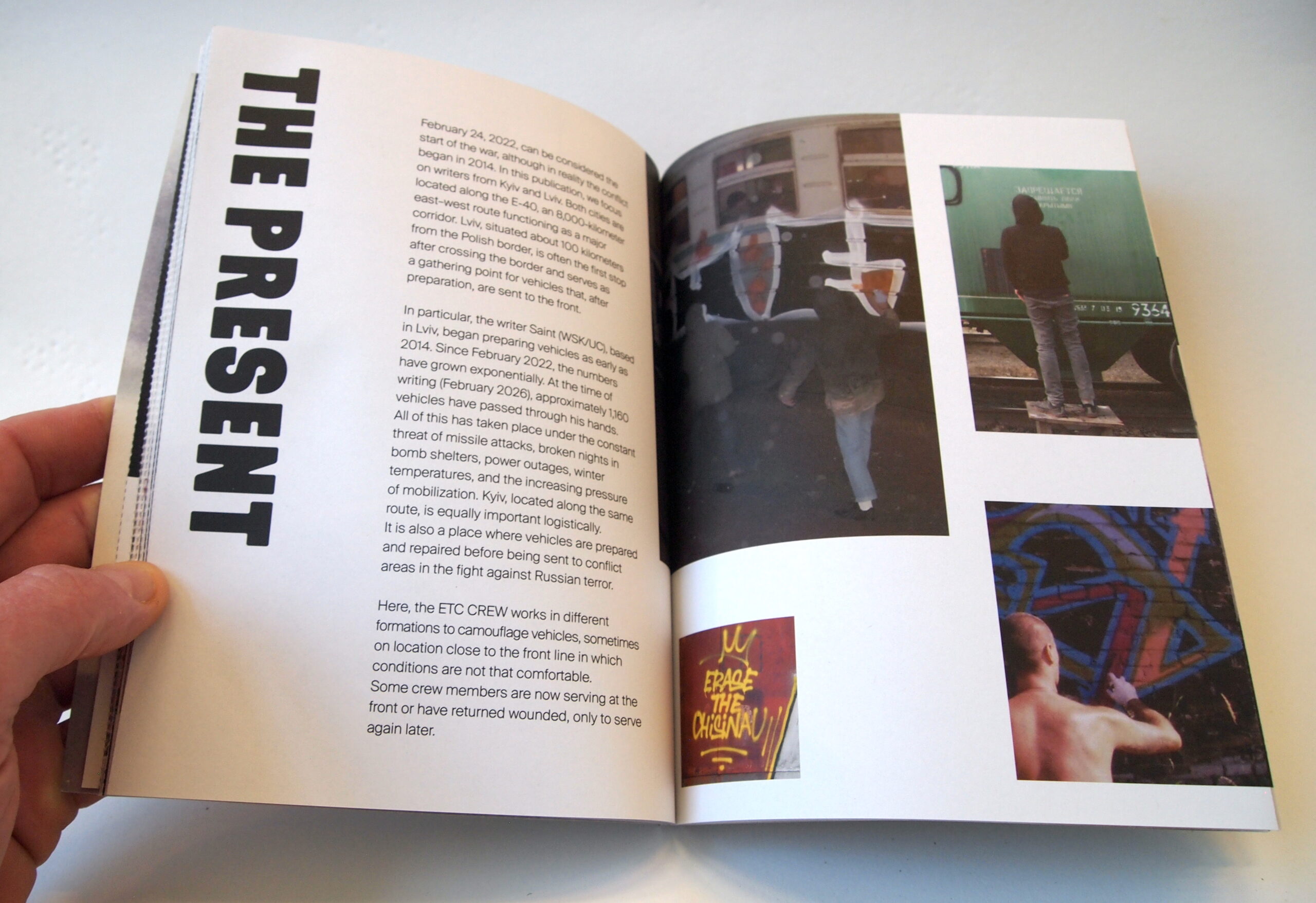
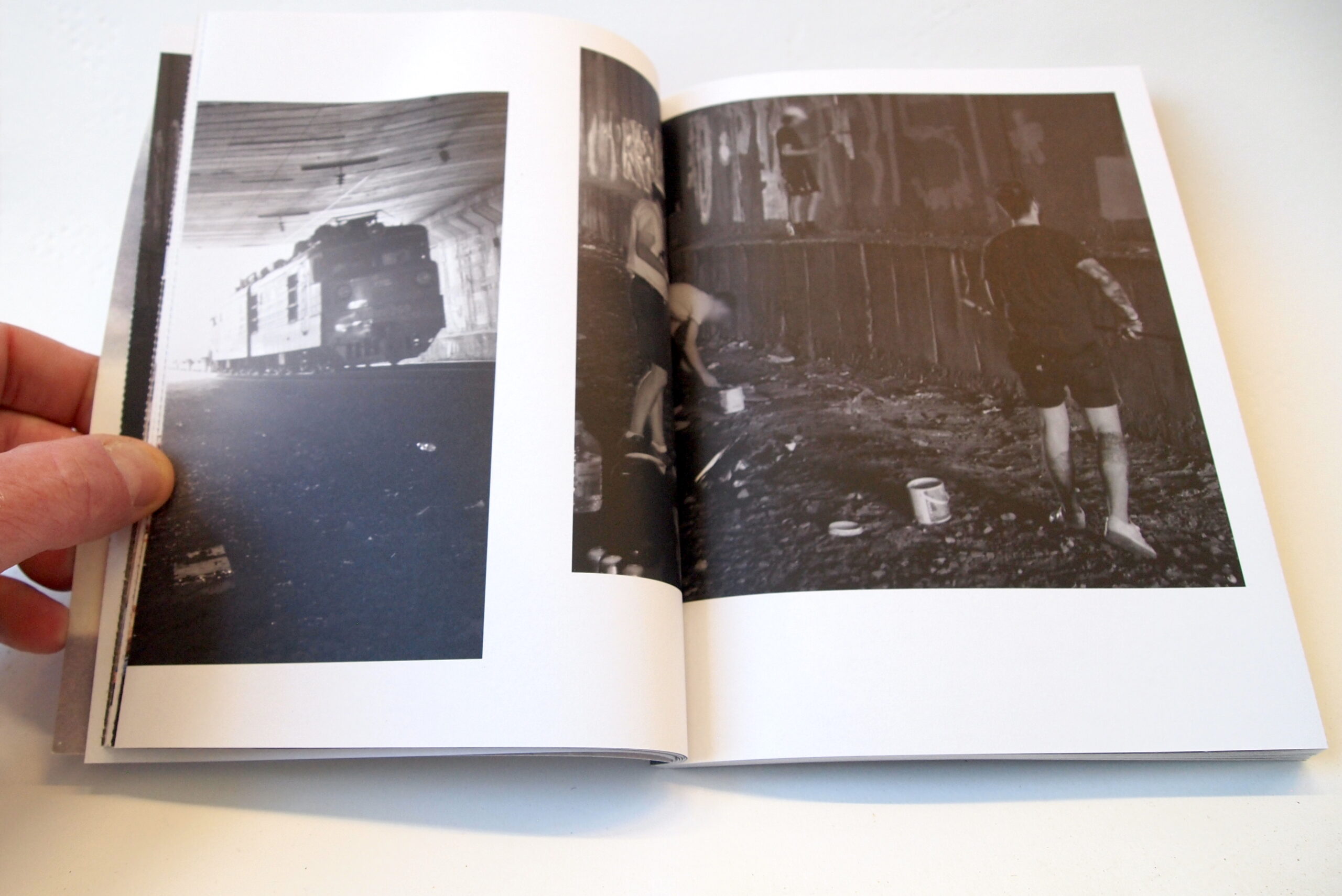
The book documents Ukrainian graffiti writers — among them Saint (WSK, UC) from Lviv and members of the Kyiv-based crew ETC (Erase the City) — who, over the course of the war, began camouflaging military vehicles used on the frontline. Produced anonymously by three graffiti writers we will call Mr Pink, Mr Yellow and Mr Brown, the publication serves both as a visual document and as a fundraiser supporting the writers involved, all of whom have carried out the camouflage work voluntarily since 2022.
What Duality captures is not simply the transformation of graffiti writers into camouflage painters. More unsettlingly, it reveals how a subculture built around movement, freedom and informal international networks adapts when war suddenly makes those very conditions impossible.
“At first we didn’t even think about making a book,” Mr Pink tells me. “We were just talking about what was happening with our friends there. But slowly we realised this wasn’t some small local story. You had a graffiti subculture entering a war. Maybe in a camouflaged way, but still — becoming part of the conflict.”
The sentence stays with me because it captures something larger than graffiti itself. Over the past decade, underground European youth cultures — from train writing to rave scenes — have been shaped by a sense of fluid circulation. Cheap flights, internet networks and informal international communities created a generation for whom mobility became almost natural. Graffiti writers travelled constantly between cities, sleeping on couches, painting trains, building friendships through movement itself. War abruptly destroys that geography.
“It’s the end of travelling,” says Mr Pink. “The end of networking. The end of being free.”
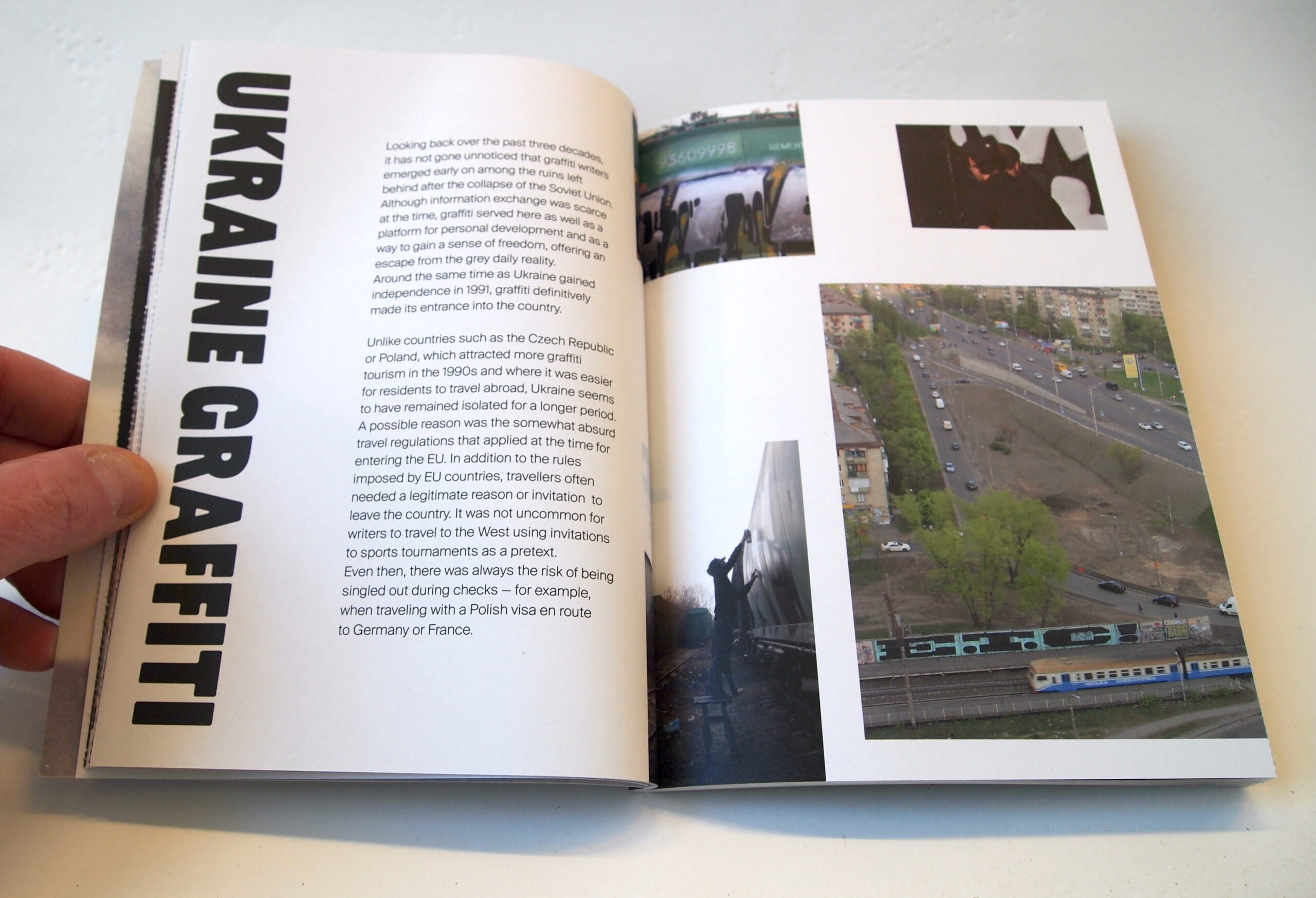
The story behind Duality actually begins years before the full-scale invasion of 2022. Mr Pink had been travelling regularly to Ukraine through graffiti networks since the 2010s, building close relationships with writers in Kyiv, Lviv and Odesa.
“I arrived there as a graffiti writer,” he explains. “We made friends and visited each other for years. People came to visit us, we travelled to Ukraine. Kyiv, Lviv, Odesa — there were connections everywhere. It was really this normal graffiti thing where you travel, meet people, paint together, sleep at somebody’s place, then they come back to your country later.”
Looking back now, those years feel almost impossibly distant.
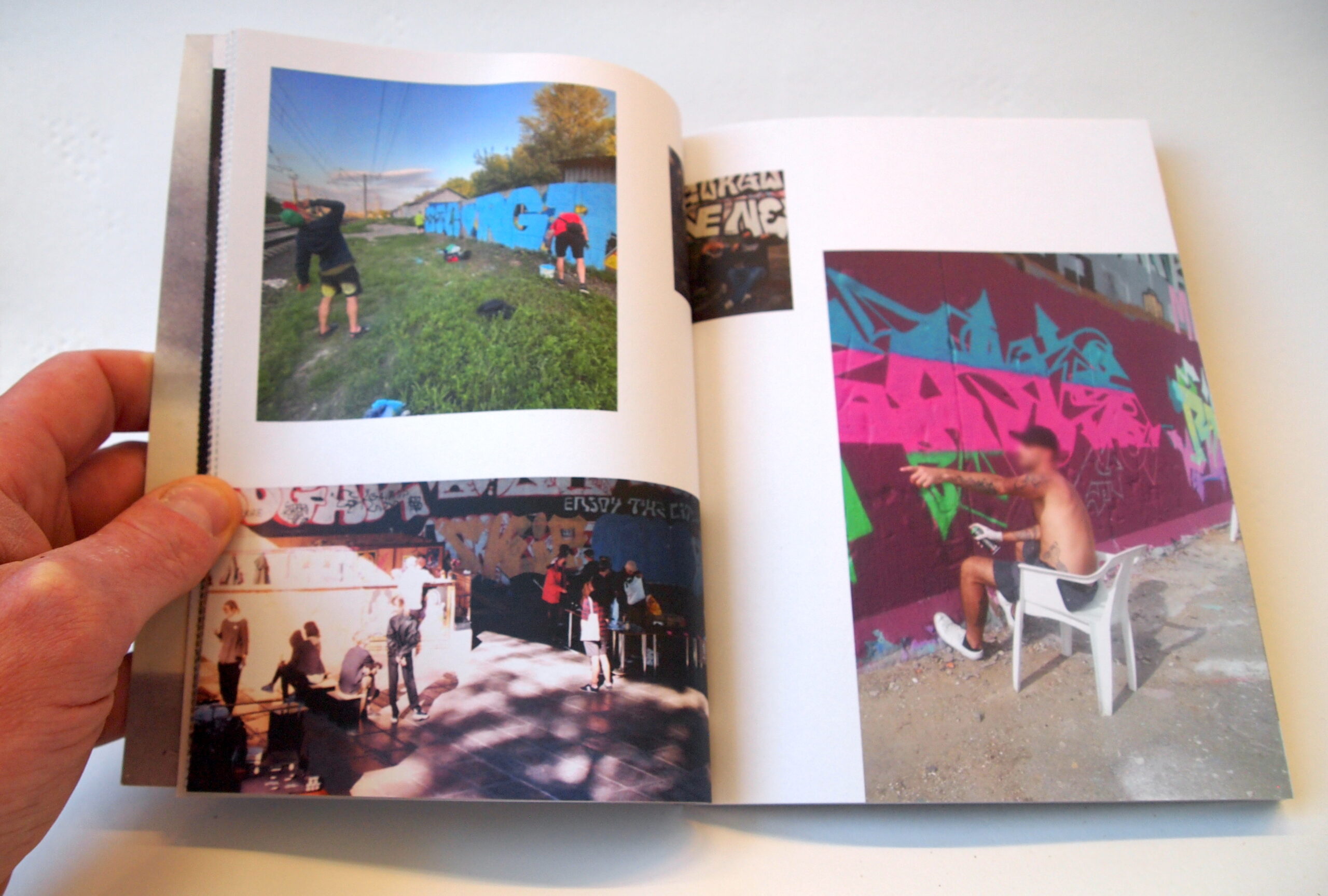
One of the most striking aspects of the conversations around the book is the way ordinary life continues to coexist with wartime reality. Outside Ukraine, war is often imagined as a complete suspension of civilian existence, as though daily routines disappear entirely beneath military emergency. But the people involved describe something psychologically more complex and, in some ways, more disturbing precisely because of its normality.
People still meet friends. Writers still paint trains. Freight traffic still moves across the country. At the same time, some of those same writers spend mornings camouflaging military vehicles arriving from western Europe.
“For many people it sounds impossible to understand,” Mr Pink says. “But daily life continues. Sometimes they would camouflage vehicles in the morning and later go paint freight trains.”
He pauses before continuing.
“For many people outside Ukraine this is completely crazy. But if you look more closely, people are still trying to have a life. Graffiti is not suddenly disappearing because there’s war. Maybe mentally it changes, maybe people paint less, maybe there’s less energy. But the need to continue living somehow is still there.”
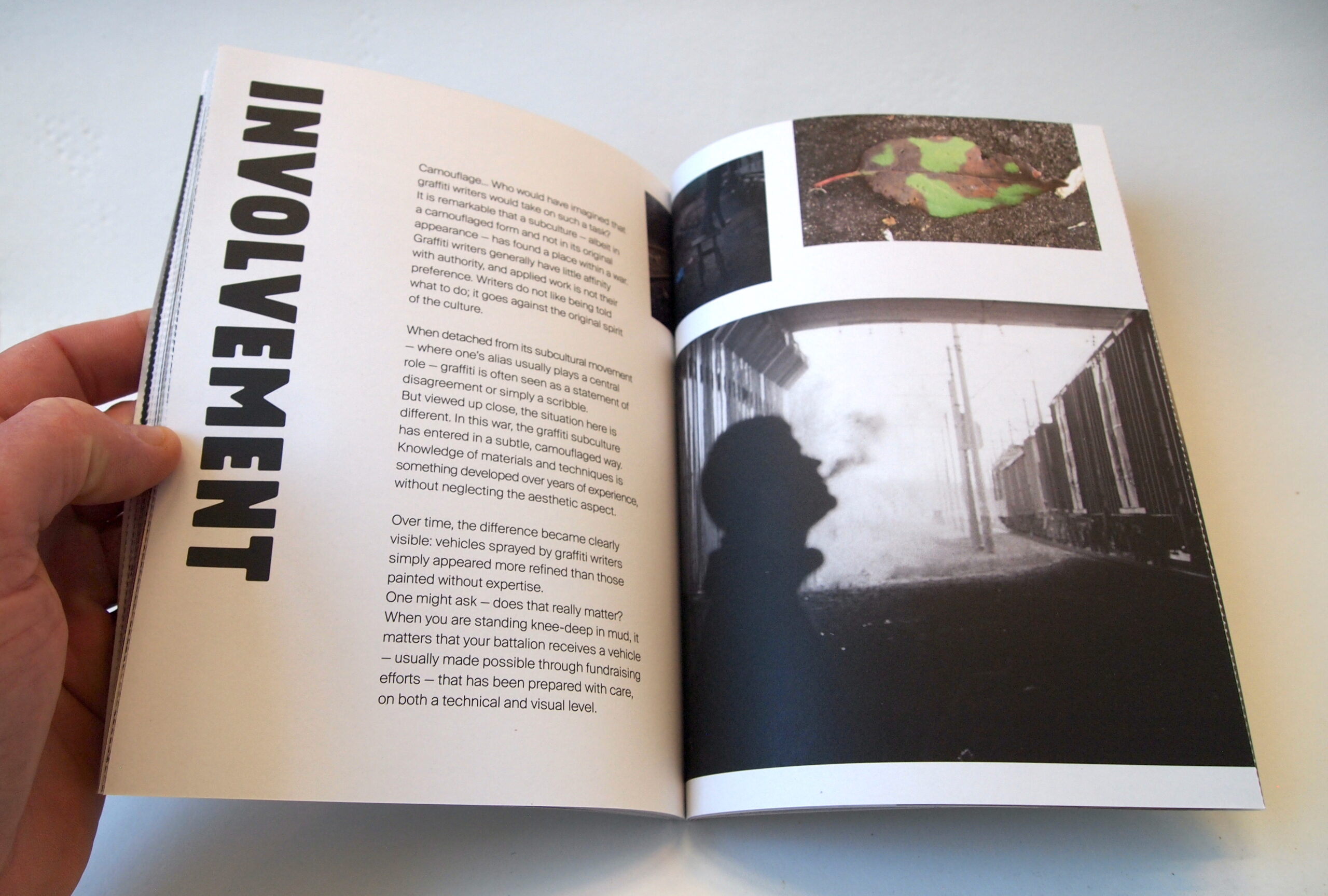
The transition itself was gradual. One of the writers featured in Duality, based in Lviv, had already started camouflaging vehicles after the annexation of Crimea in 2014, when requests first began circulating informally through local networks. But after February 2022, the scale intensified dramatically. According to the people behind the project, that single writer has now worked on more than 1,200 vehicles.
The number feels almost surreal. Yet what makes it fascinating is how naturally graffiti techniques migrated into wartime logistics. Spray-can control, improvisation, speed, large-scale surface adaptation — skills developed through illegal painting suddenly acquired military utility.
“The switch is not really a switch,” Mr Pink explains at one point, almost trying to correct the way the story itself could be interpreted.
“People think maybe somebody stops graffiti and becomes involved in the war. But it’s not like a digital thing, like zero or one. Both realities coexist at the same time.”
And yet the participants resist any attempt to frame the story heroically. Again and again, they insist that graffiti and camouflage coexist rather than replace one another. The same hands continue moving between trains and military vehicles. One activity does not erase the other.
That ambiguity complicates many western assumptions surrounding graffiti culture itself. In countries like France, Germany or the Netherlands, train writing is usually discussed through legality, urban damage or public order. In wartime Ukraine, those categories become strangely secondary.
“At the end of the day,” Mr Pink says, “this whole battle is about trying to keep some kind of normal life. Graffiti maybe isn’t essential for society, okay. But people still want a society with culture, with variation, with different ways of living. So writers continue painting, but they also collect money, help with equipment, organise support. Everything exists at the same time.”
The same logic has appeared elsewhere across Ukrainian underground culture. Recent reporting on Kyiv’s nightlife has described clubs and raves transforming into hybrid spaces functioning simultaneously as parties, fundraising infrastructures and emotional survival systems. Under curfews, drone alerts and permanent uncertainty, nightlife has become less about escapism than about maintaining forms of collective psychological continuity.
The parallels with graffiti culture are obvious. Both worlds operate through informal, transnational and deeply DIY infrastructures. Both rely on mobility, networks and collective trust. And when the invasion intensified, those networks reorganised themselves almost instinctively.
“What surprised me,” Mr Pink says, “was how fast writers organised themselves. Somebody knew somebody who could provide equipment, somebody organised print sales, somebody transported medicine or paint. It was all very grassroots.”
Mr Yellow picks up the story from there.
“In Germany there were already Ukrainian writers living there before the war,” he explains. “Some were studying, some were working there. And they started organising things immediately. Artists supported them, local graffiti shops helped with discounted cans, some brands donated paint. Everything was very informal. Nobody was waiting for institutions.”
He laughs briefly before adding another detail.
“Sometimes brands donated colours that were completely wrong. Bright greens, things like that. Not really military camouflage colours. But somehow people still found a way to use them.”
What emerges from these conversations is not simply solidarity, but a form of underground logistics — decentralised, improvised and largely invisible from the outside. Listening to them, it becomes difficult not to think about the historical similarities between graffiti culture and earlier hacker or DIY publishing cultures: anonymous networks, self-organised infrastructures, information circulating outside institutional channels.
The question of anonymity eventually returns naturally during our conversation.
Graffiti historically emerged as an anonymous culture, yet social media has gradually transformed visibility into an essential part of the practice. Many contemporary writers now document everything online, often blurring the old boundaries between secrecy and self-promotion. Duality deliberately moves in the opposite direction.
“Graffiti is already an ego culture,” Mr Brown says. “So it made no sense for us to turn this into something about ourselves. The important people are the guys in Ukraine.”
But behind that discretion lies another anxiety: how to tell a story that is not entirely yours to tell.
“We constantly checked things with the Ukrainian writers involved,” explains Mr Yellow. “Because there’s always a risk when you tell somebody else’s story. You can’t project your own fantasy onto their reality. We’re outsiders in this conflict. So we were always asking them: ‘Are you okay with this? Does this feel right to you?’”
That caution is probably why the publication never feels exploitative. Rather than aestheticising war, Duality focuses on fragmentation, exhaustion and memory.
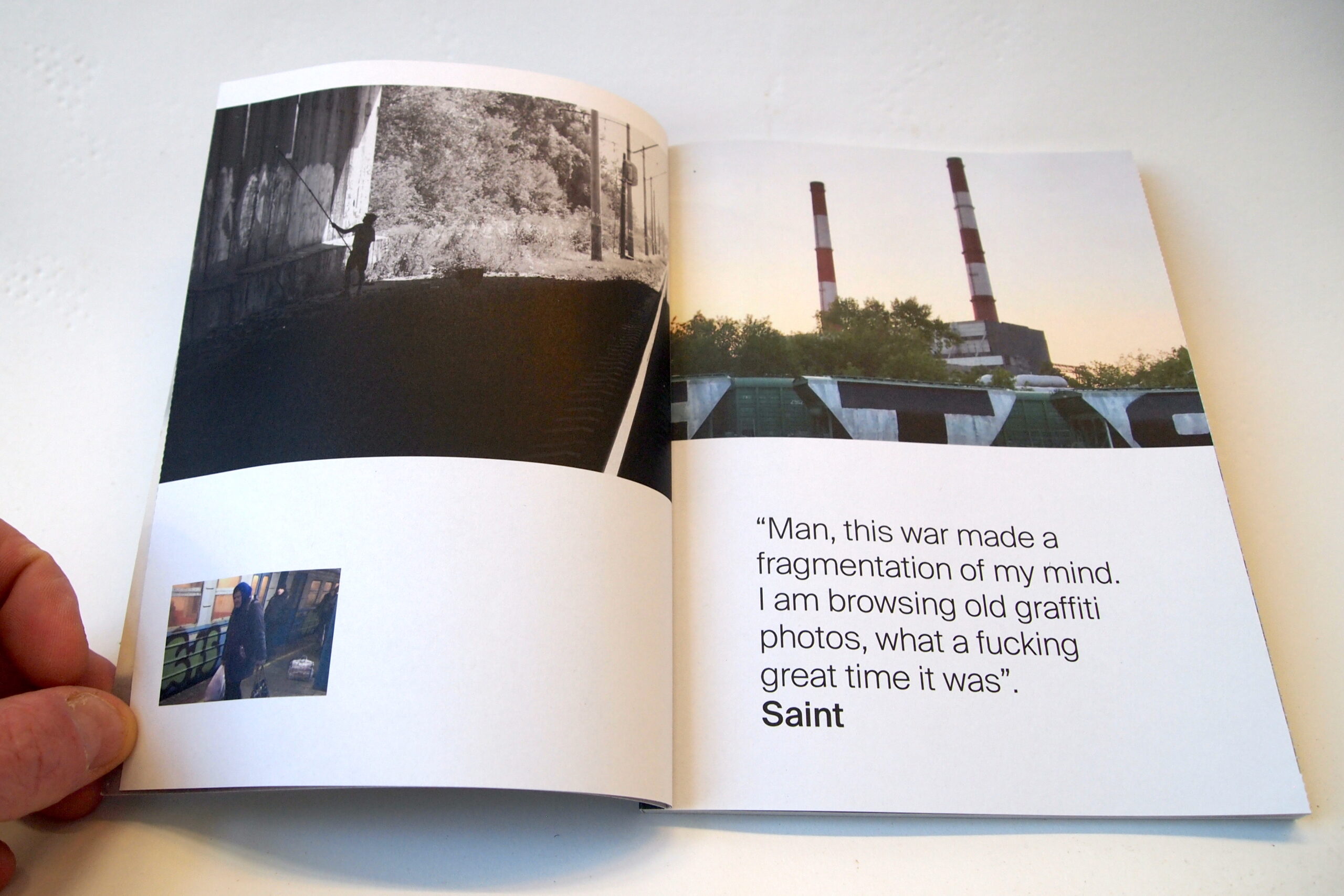
Saint, one of the writers involved, reportedly rediscovered old prewar photographs while helping prepare the book and realised how thoroughly the war had psychologically erased his previous life. “The war made me forget what a great time we had before.”
Mr Yellow explains how that sentence slowly became the conceptual basis for the entire publication. “He was browsing old photos and suddenly realised how bright life had felt before the war,” he says. “Not because life was perfect, of course there were problems already. But compared to now, it suddenly felt like another world.”
When first opened, the book reveals only one layer of reality: fragmented images from life before the invasion — train yards, parties, travels, friendships, small moments suspended inside a world still defined by movement.
The war is invisible. The interior pages remain sealed within folded sheets whose edges have been left uncut, following an old bookbinding technique once standard in European publishing, where readers were expected to slit the folds with a paper knife before reading.
To reach what lies inside — the camouflage vehicles, the military logistics, the visual reality of the present — the reader must take a blade and cut the pages open. The gesture is irreversible.
“You need to destroy the book to see what they are doing now,” one of the designers tells me.
It is an unusually effective metaphor. Because war does not simply add another layer to life. It tears through existing realities, reorganising memory itself.
As the conversation progresses, another subject slowly emerges: psychological exhaustion.
“There’s a general feeling of depression,” Mr Pink says quietly. “There’s no horizon anymore. No perspective. Sometimes even being called to the army can feel like a kind of liberation because at least then you know what you’re up to.
“The war absorbs every part of your mind. You cannot unblock yourself creatively because mentally everything is occupied by stress, air alarms, drones, uncertainty. The war changes people, even if daily life continues.”
That feeling appears repeatedly today in conversations surrounding younger Ukrainians, especially men of mobilisation age. Across Europe, thousands now live in a suspended condition — physically outside Ukraine, but psychologically unable to detach themselves from the country, the language, the culture and the guilt associated with leaving.
Inside Ukraine, others remain trapped in another kind of suspension: waiting, adapting, surviving while trying to maintain fragments of ordinary existence.
And perhaps that is ultimately what Duality documents most powerfully. Not simply writers painting military vehicles, but an entire underground culture attempting to preserve fragments of friendship, movement and identity while living inside a war that the rest of Europe has slowly learned to look away from.
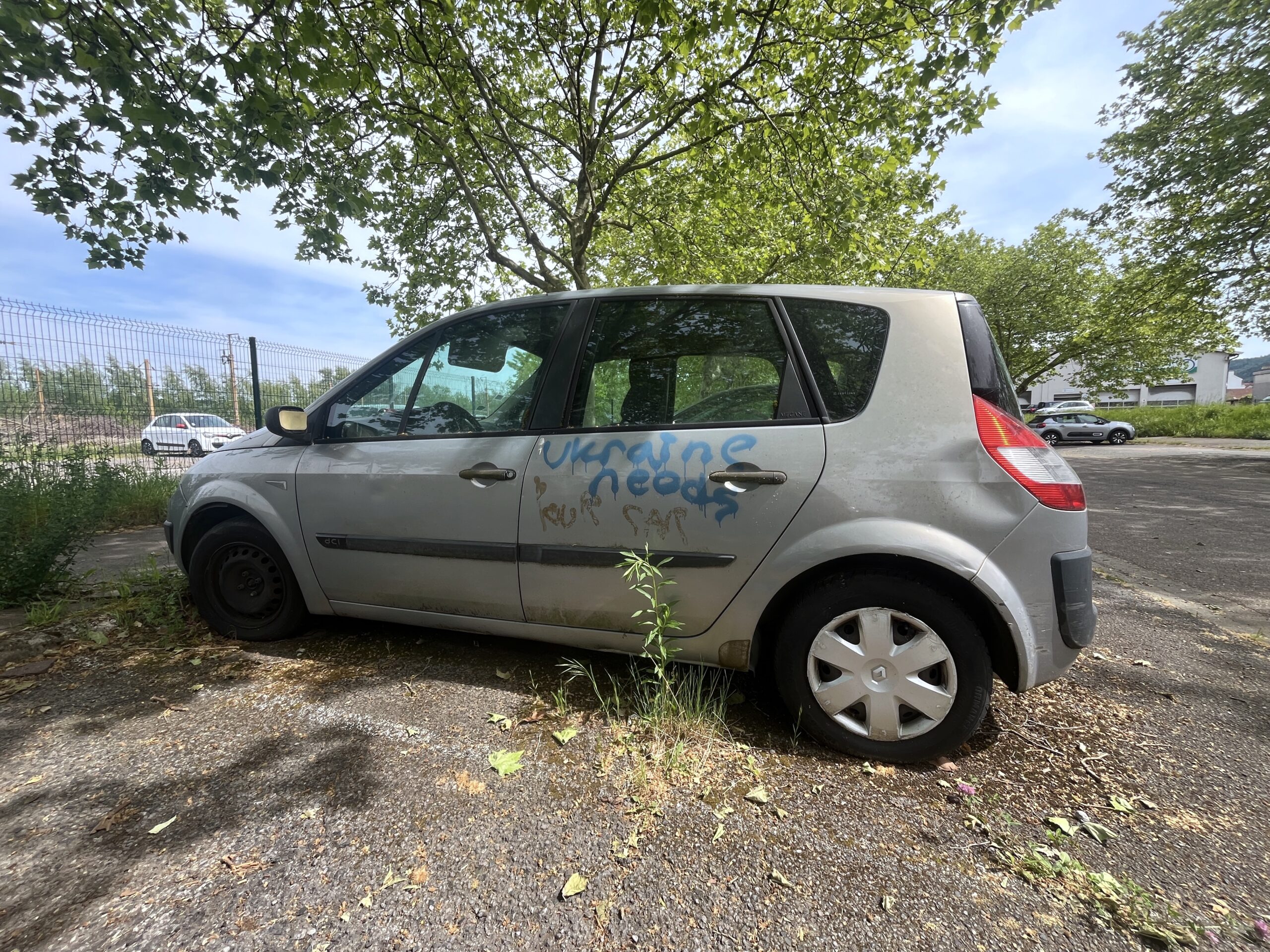
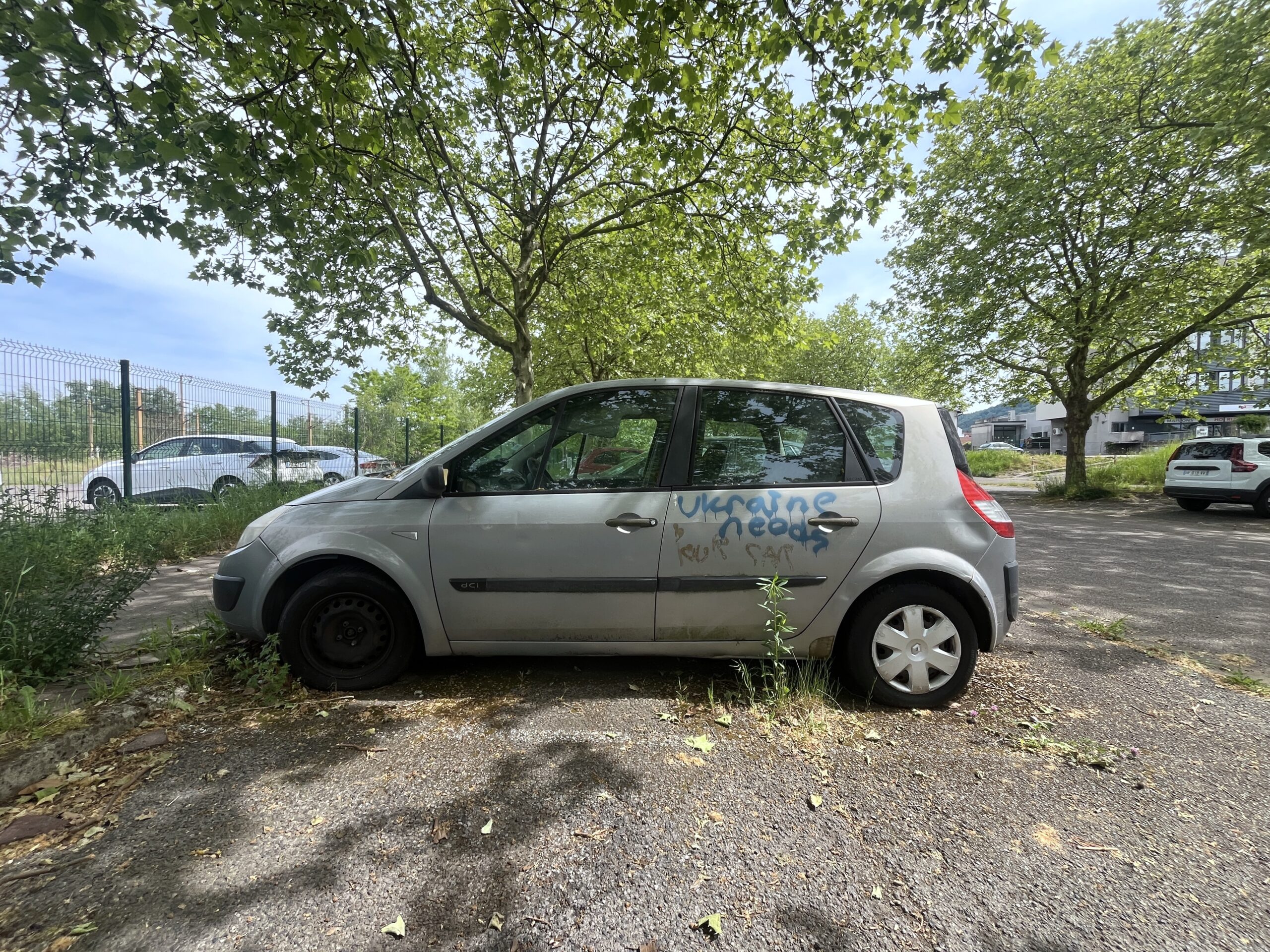
A few hours after meeting the editors behind Duality, I found myself standing in a half-empty parking lot beside a small German railway station, waiting for a connection. There were no toilets inside, so I walked out to find somewhere discreet. When I turned around, I noticed an abandoned Renault Scénic, weeds growing through the asphalt around its tyres. Across the rear doors, someone had spray-painted three words in blue: Ukraine needs your car.
No tag, no crew name, no signature. Just a message left on a car that nobody was coming back for, in a place that nobody was really looking at.
For inquiries related to Duality, contact the authors directly: dualityprinted(at)proton.me or through their Instagram
Explore More
The following publications are not directly related to the people or crews featured in this article. They offer broader context on Ukraine’s underground cultures, graffiti scenes and the impact of war on youth communities across the country.
- Rubae – The Book
A freight-graffiti focused publication documenting the wagons of Kovalska, one of Ukraine’s largest construction and building materials companies. - Yuriy Marmeladov – Children of the Capital
An intimate portrait of Kyiv’s urban exploration and graffiti communities between 2016 and 2022, documenting rooftops, metro tunnels, abandoned places and youth culture before the war transformed the city. - Element magazine archive
Archive of Element, one of the key publications documenting Ukraine’s graffiti scene. - Ukraine: Nightlife in Resistance
Documentary exploring how Ukraine’s electronic music and club communities transformed after the Russian invasion, with venues becoming volunteer hubs, fundraising spaces and community infrastructures. - Natalie Keyssar – How These Ukrainian Artists Are Using Their Talents to Support the War Effort A photo essay documenting how young Ukrainians channel creative skills into the war effort — from graffiti writers in Kyiv’s ETC crew camouflaging military vehicles in an industrial garage to K-pop dancers in Maidan Square raising funds for the army, all while navigating air raid sirens and the psychological weight of prolonged conflict.
- Fuzine #8 – Adrien Vautier
A 40-page fanzine extending a podcast conversation with photographer Adrien Vautier, moving from graffiti among football ultras to war zones in Ukraine, Syria, Afghanistan and the West Bank, while reflecting on the ethics and emotional toll of documenting conflict. - Non Stop
A tribute to Vlad “Pirat”, one of the key figures of Ukrainian skateboarding culture. Through the scenes of Dnipro, Odesa and Kyiv, the zine explores how skateboarding continues to function as expression, resilience and resistance in a country transformed by war.