I started my artistic research about freighthopping as a subcultural phenomenon due to the fact that I was interested in riding freights for very long time.
One of the most inspiring persons in the very beginning was the artist Other from Canada. 2009 I met him for the first time in Berlin. Later I invited him to Dresden and visited him in Argentina where we painted again together. He told me about his freighthopping adventures a bit. Back then his artistic work was intensively inspired by the freight culture in Northern America. He combined spray paint with oilsticks to realise his illustrative works.
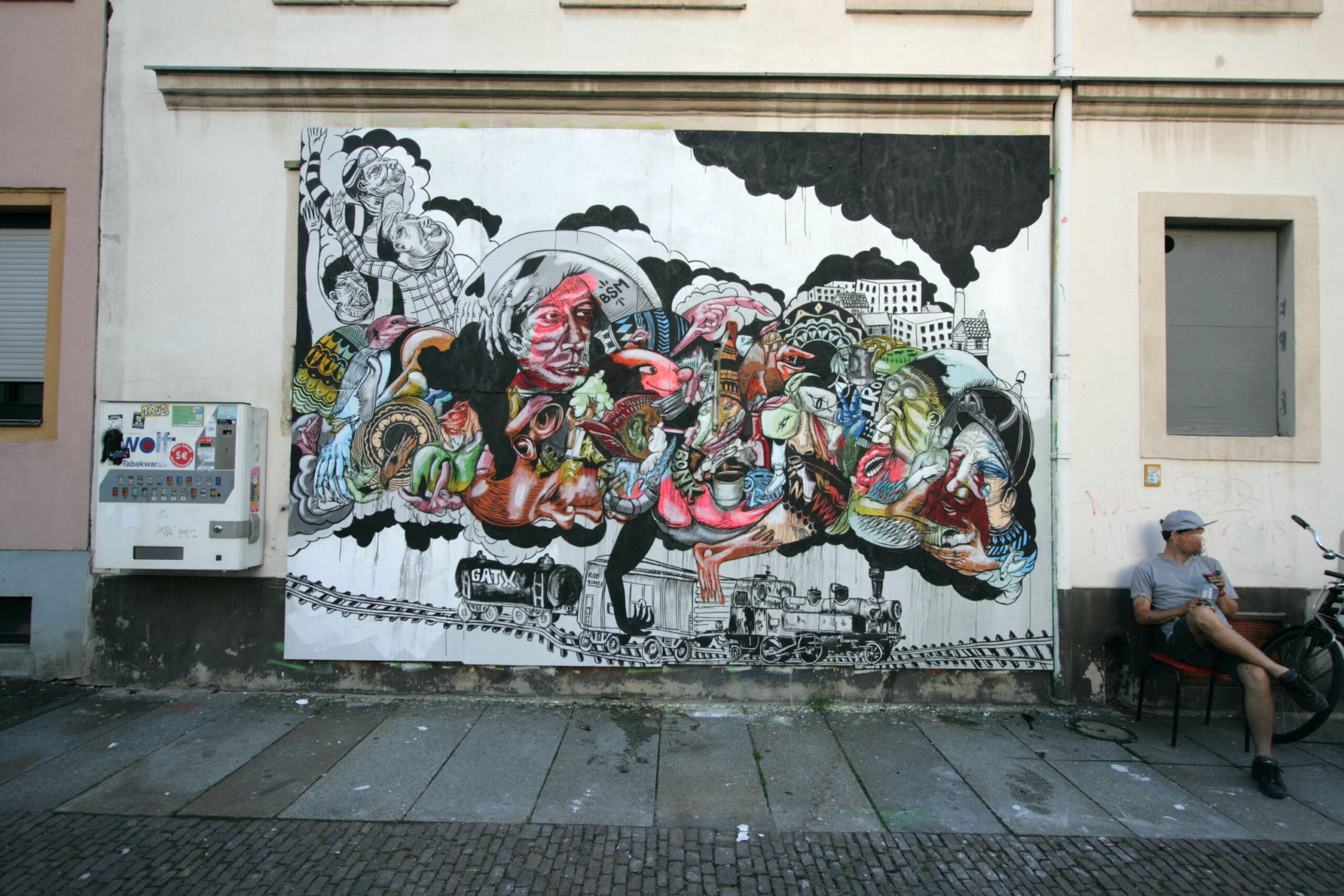
More inspirations were older stories about Hobos that I knew before: the book Freight Train Graffiti, the moving hut by Adams & Kegr, Stories by JIEM from France, online videos by Shiey, Gifgas and other people.
The accumulation of those factors and having some time to do experiments finally got me started in Italy. My first rides went mainly from Puglia up north to Emilia-Romagna and back south to Puglia. Once I started I got addicted. All those new impressions connected with the adrenalin rush made me feel the same way I did when I started graffiti in the ‘90s. The great inspirations that I got from the impressions around freight riding made me dig deeper and deeper into the topic.
Travels
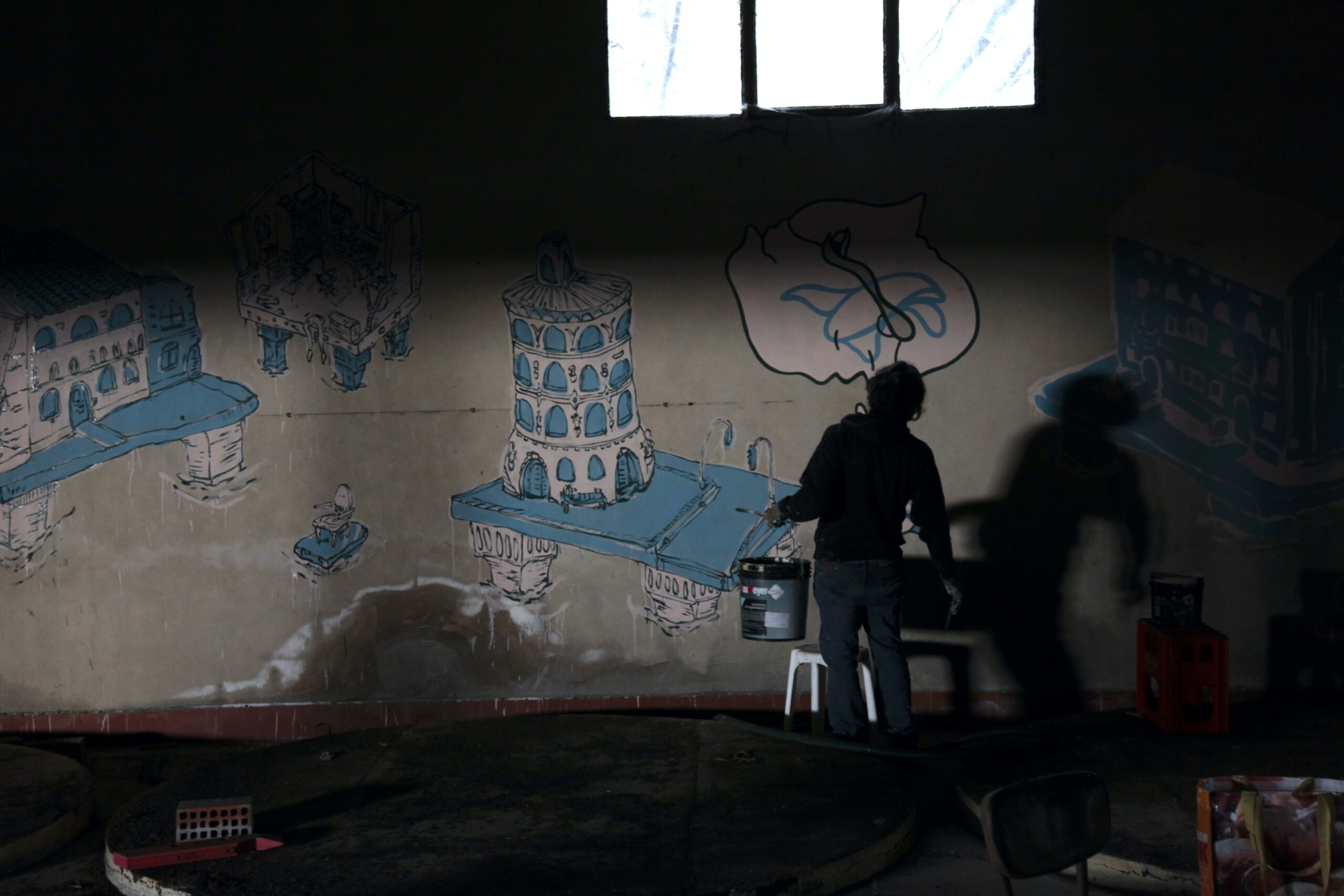
Freight riding for me was the perfect addition to my travels around Europe, which I have been doing for decades. I paint on walls of abandoned building, along tracksides and often with friends from different countries. I love to explore foreign places by day and night plus leaving traces around.
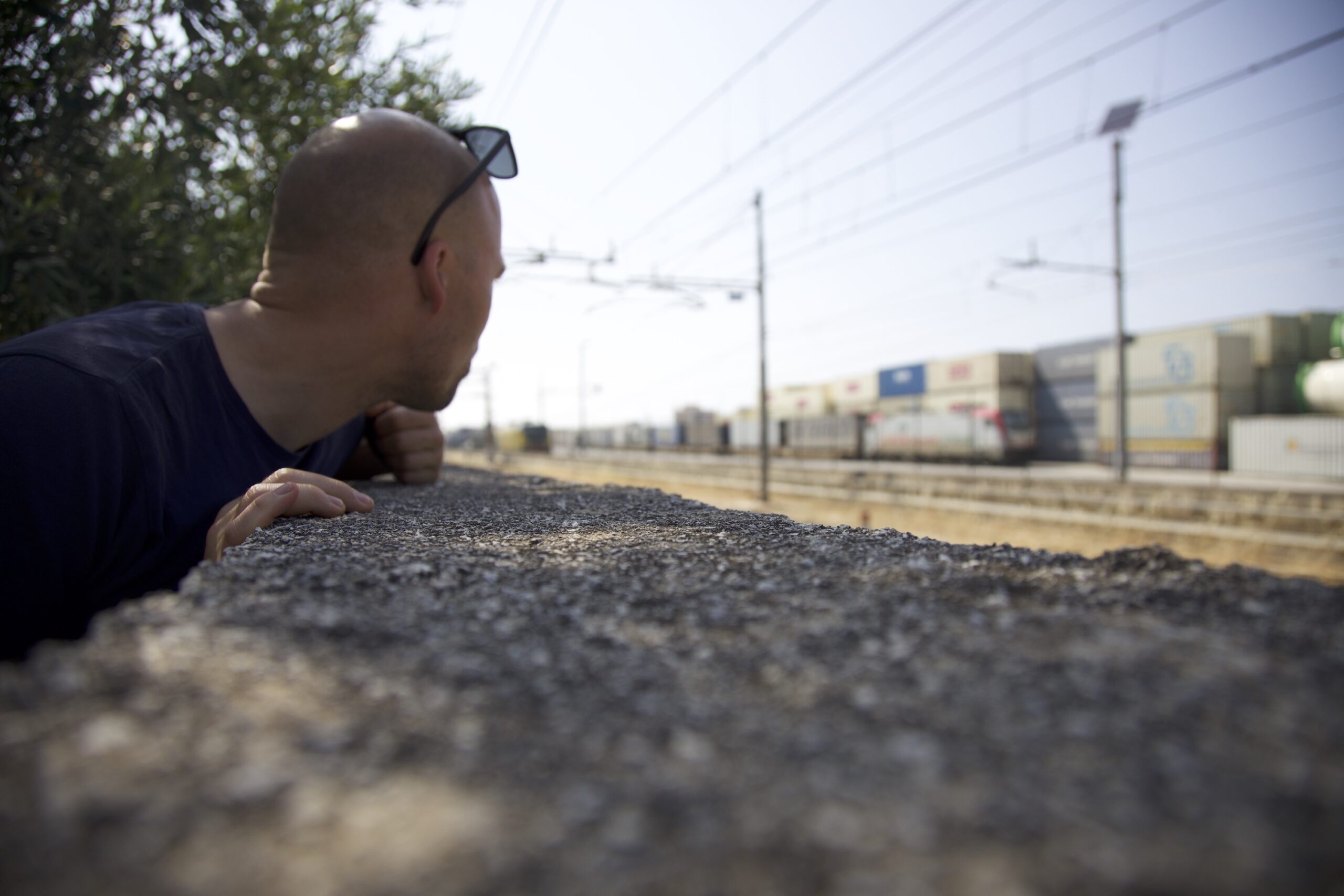
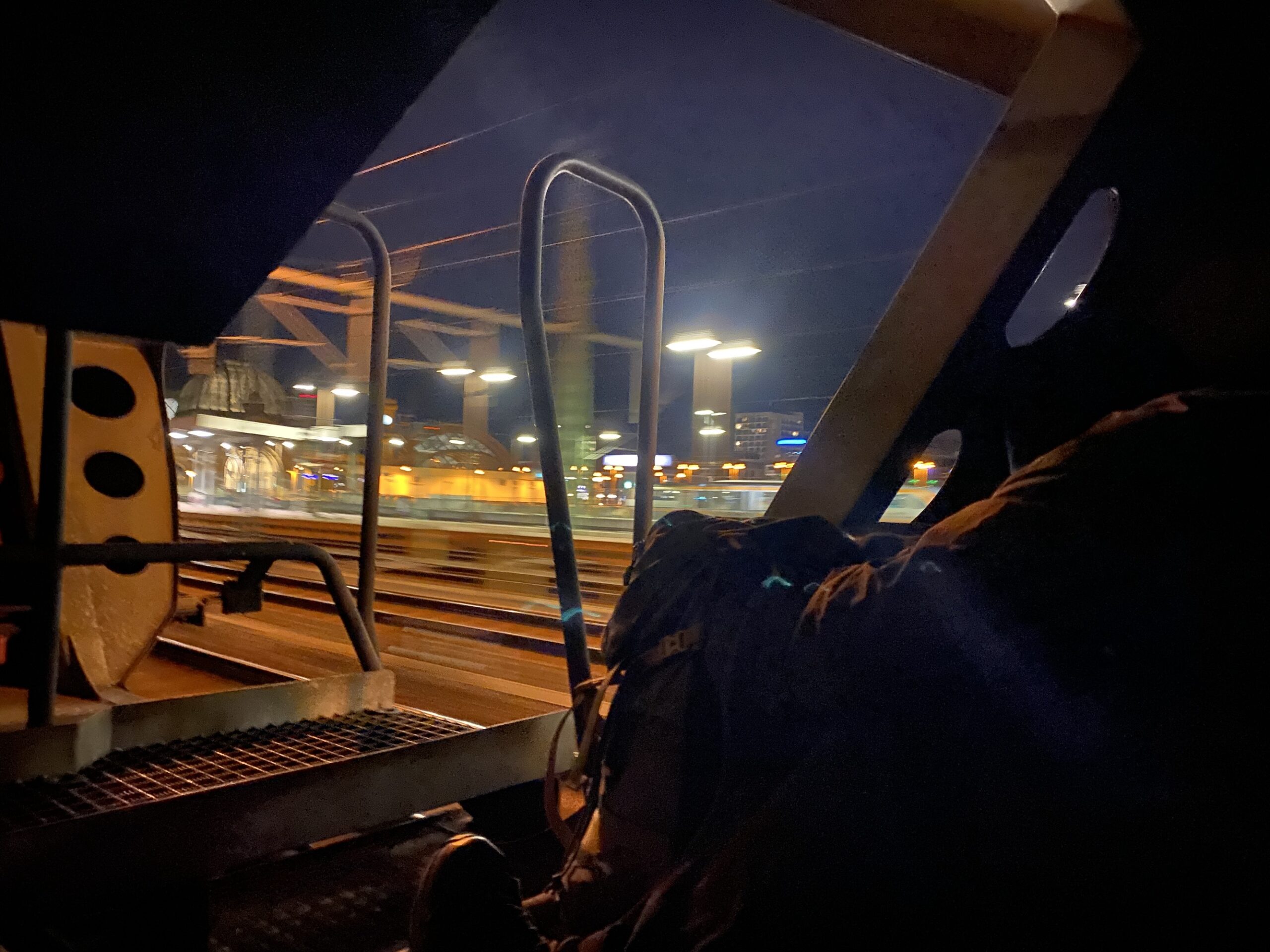
A freight ride can start during the day or night. This depends on the place where you can get on the freight. I found myself different ways to get on and off freights – which are usual in the scene.
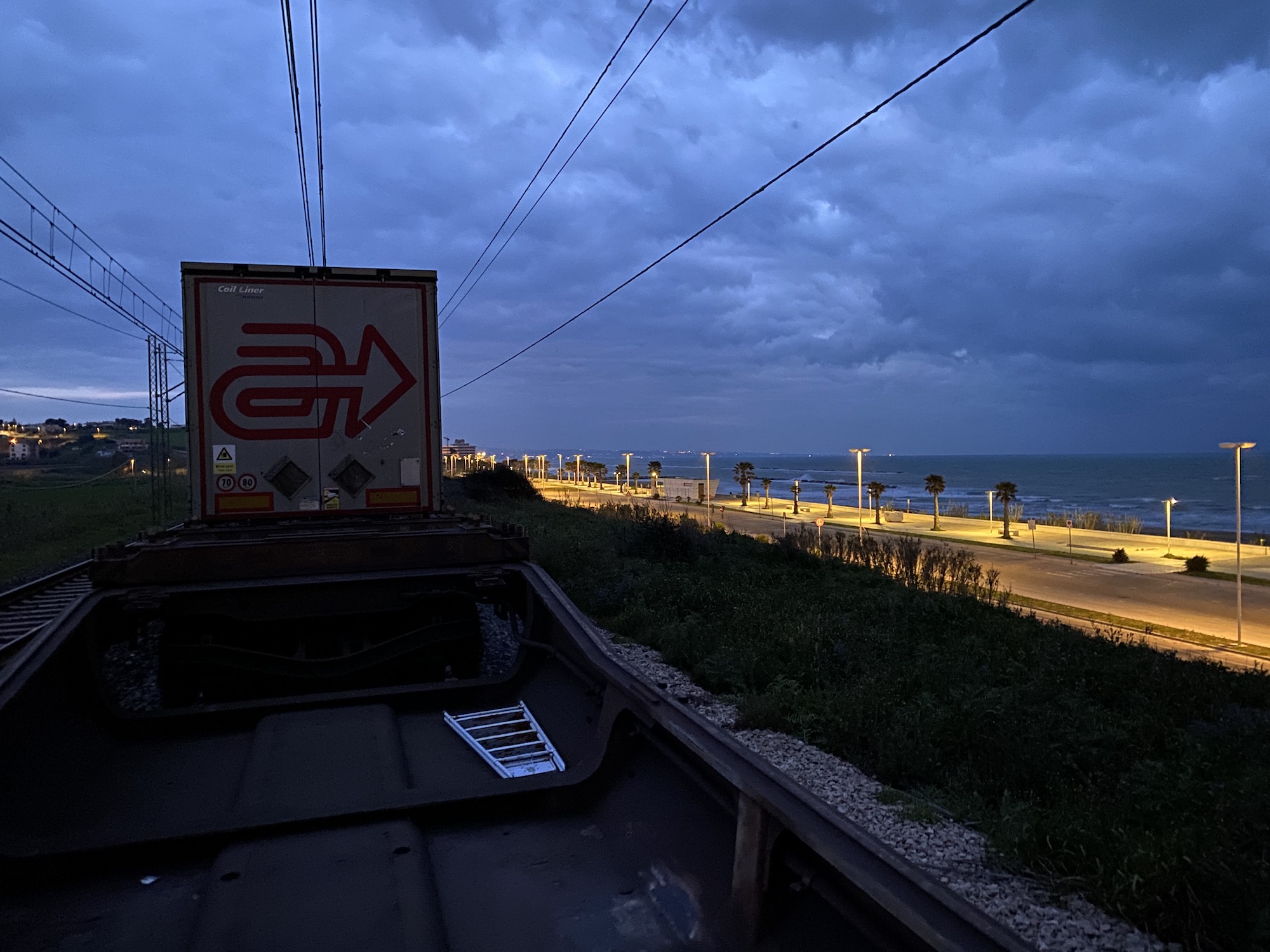
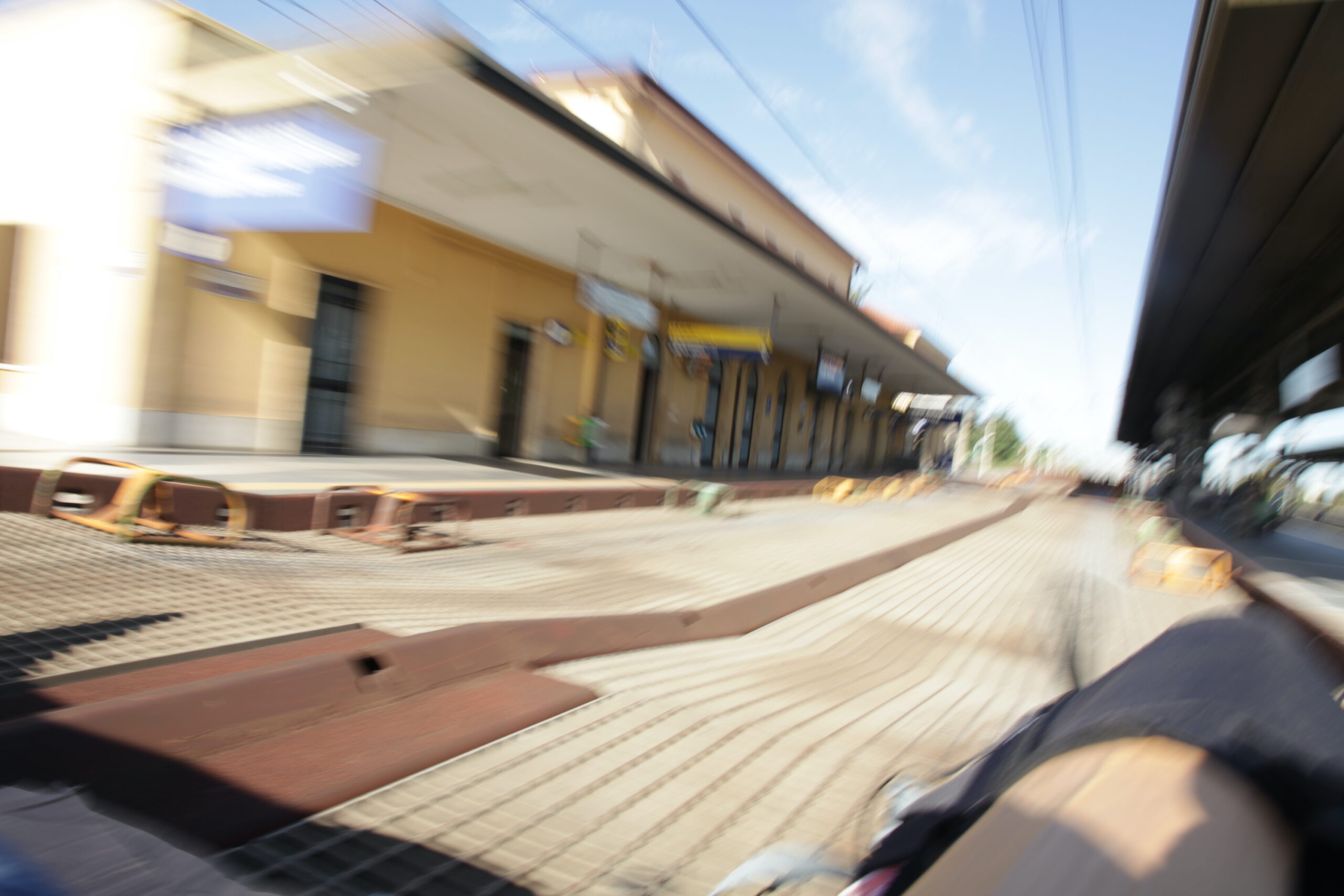
Once I started during the day near an urban intermodal terminal surrounded by an industrial area and ended up in a small village, with few roads and a beautiful beach. I even found an unlocked bicycle to move around and then just brought it back to the same spot where I found it. On my nighttime way around the village, I left some drawings, saw a baker working and enjoyed the calmness in the place.
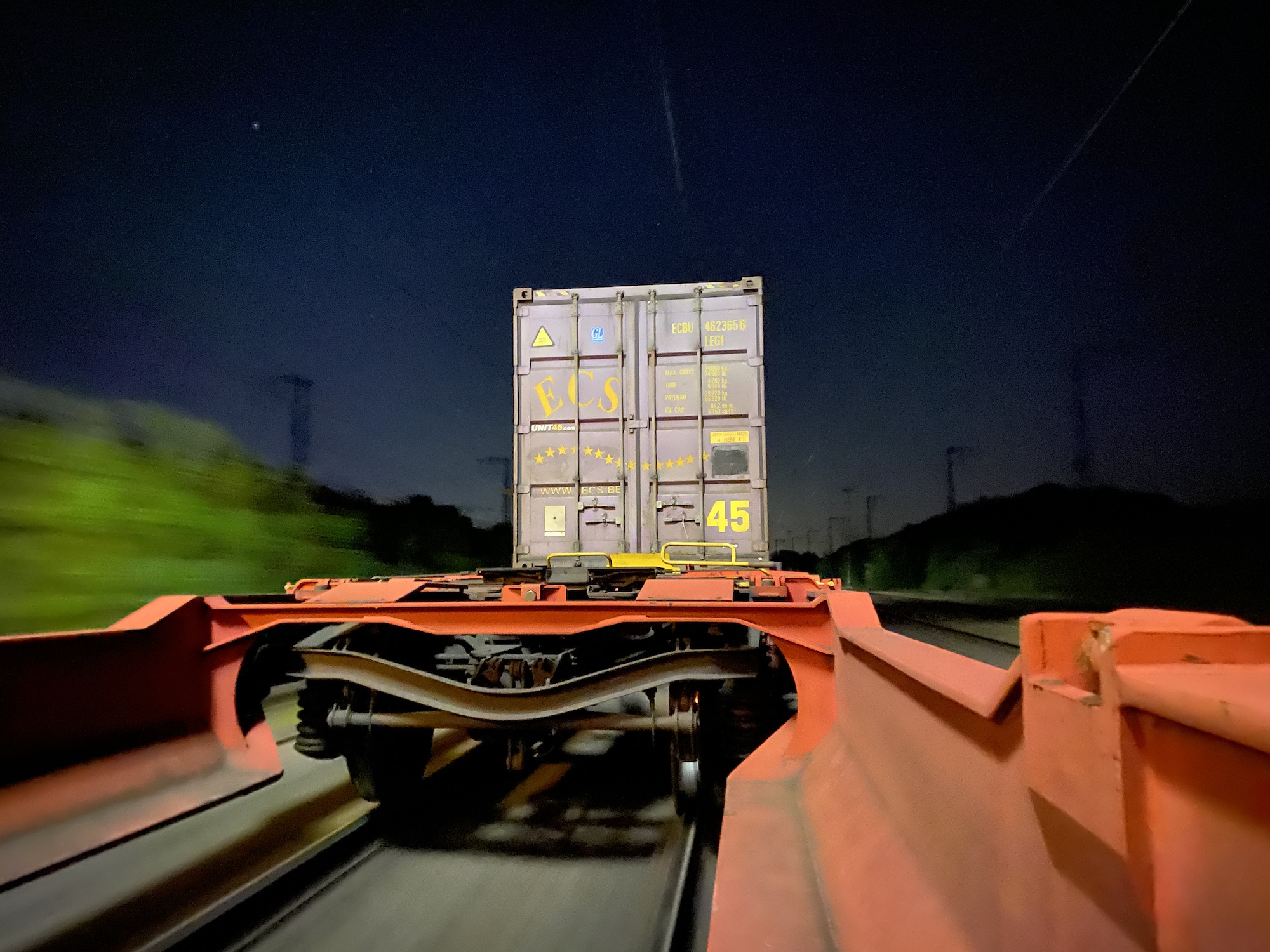
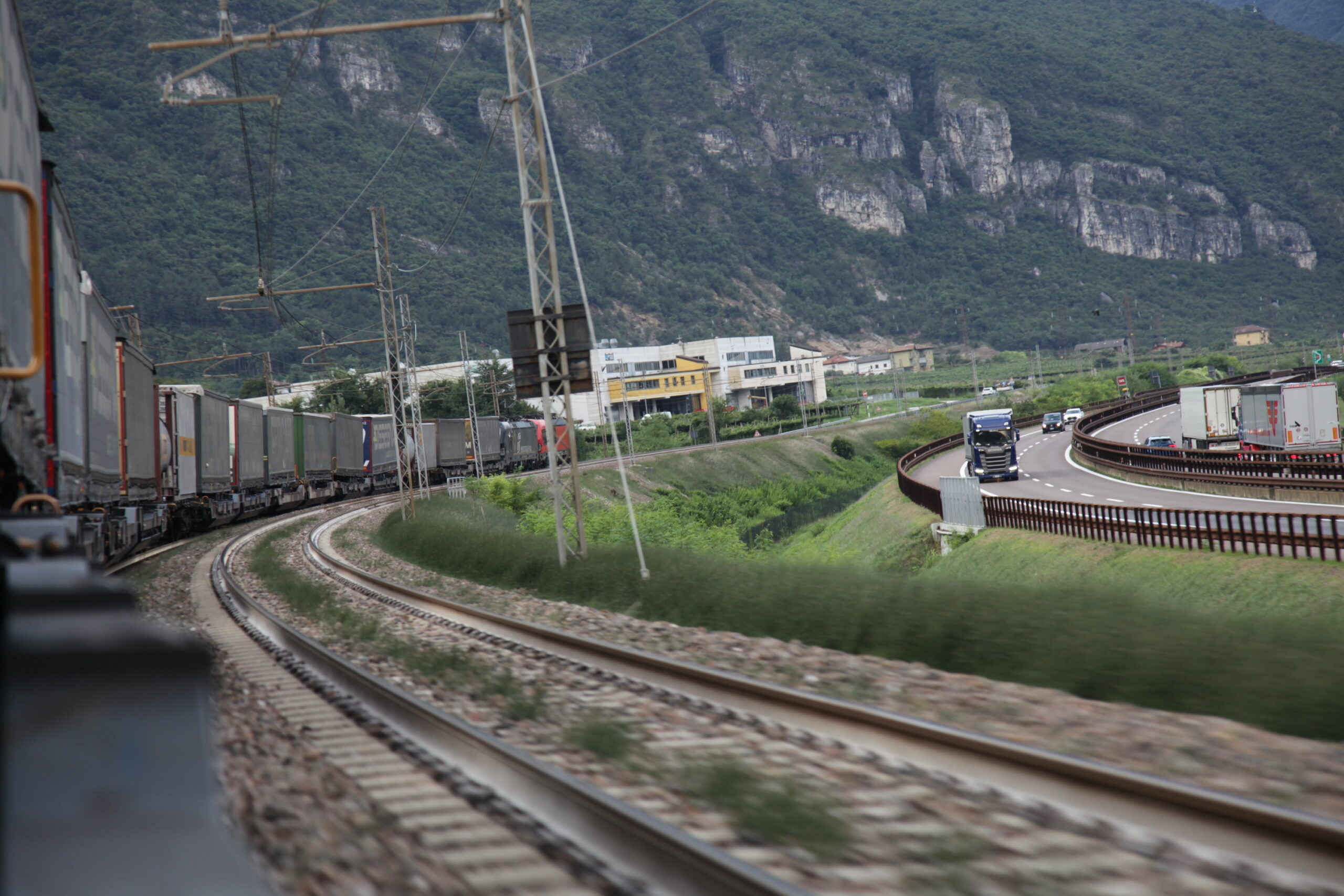
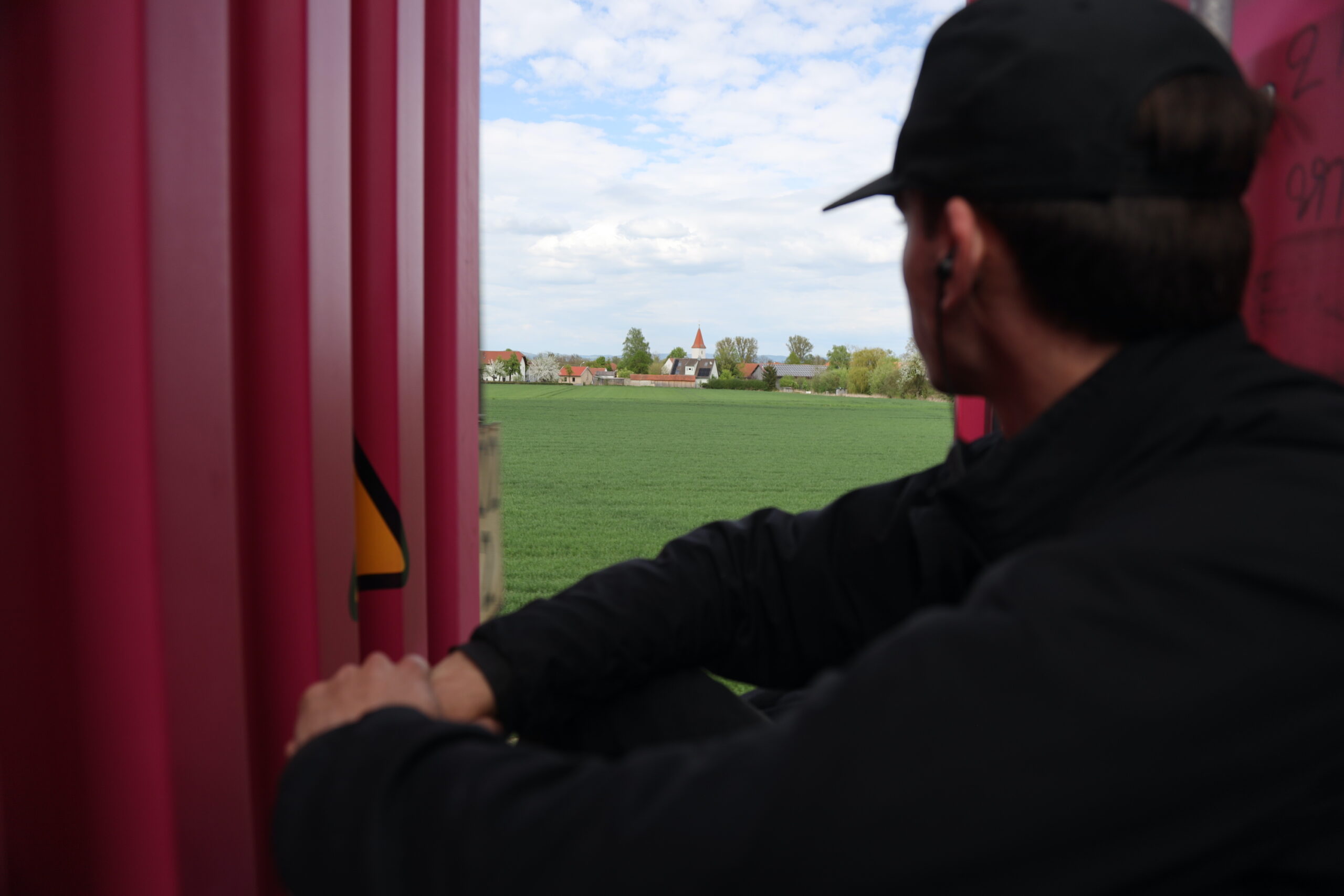
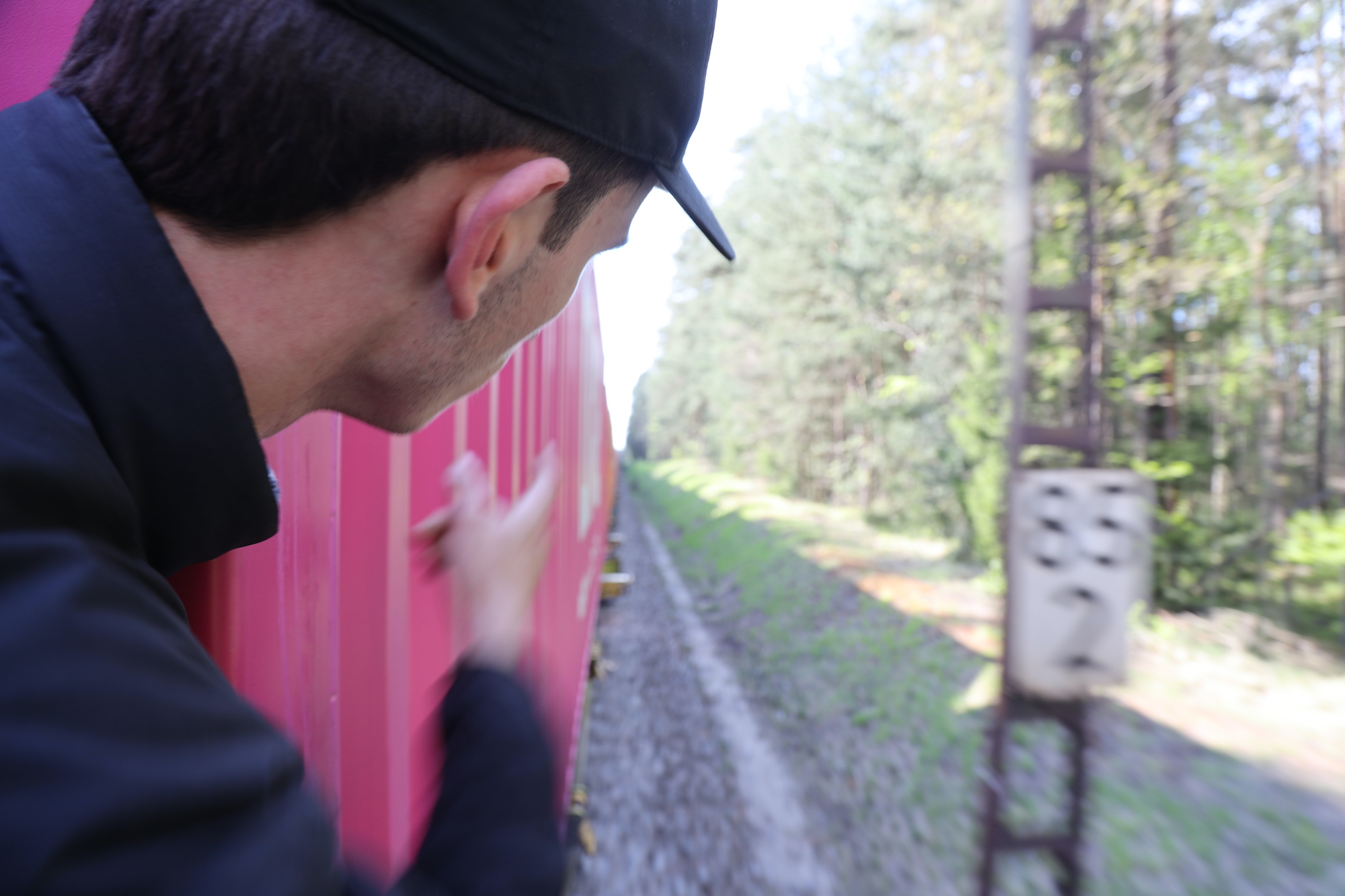
Another travel a friend and me started at night in a village where a second locomotive was attached to a container freight. The freight went over mountains and stopped in between several times. Along the way we left some marks, just visible for train workers on the tracksides and other hoppers. Finally we went down the train in the morning at the place we wanted to reach. We looked for a safe spot to sleep, found one and slept for hours after the exhausting but beautiful ride over the mountains.
There are plenty of really crazy stories to tell that happend during my travels. Each travel on a freight is full of surprises.
Directions – instead of going north, you move south.
Weather – you start in sunshine and end up in a thunderstorm, where you cannot escape .
Traffic – sometimes trains stop again and again and another day they just run through and there is no chance to get off.
Signals – Noone really knows if the right trains stops at the red light spot. Signals are unpredictable.
Chasing – you get spotted by a worker and you need to leave first the train, then the spot and maybe even the town.
Equipment
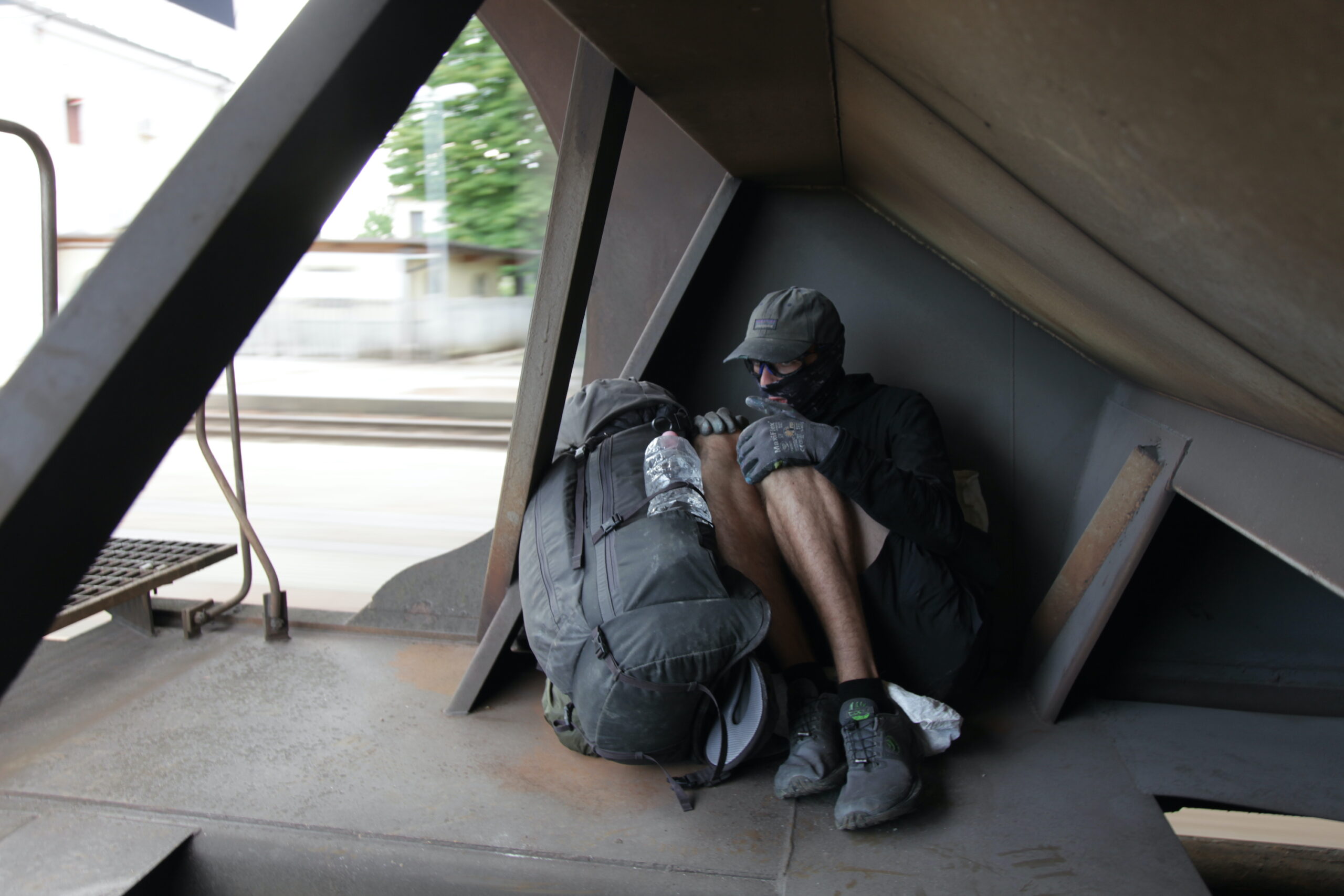
Freight hoppers in Europe carry different equipment. Some carry large back packs full of outdoor utensils. A tent, isolation mat, sleeping bag, clothing for different weather conditions, camping stove and cooking utensils. Some carry just very few things – food, water, toothbrush & toothpaste. It really depends on their way of travel.
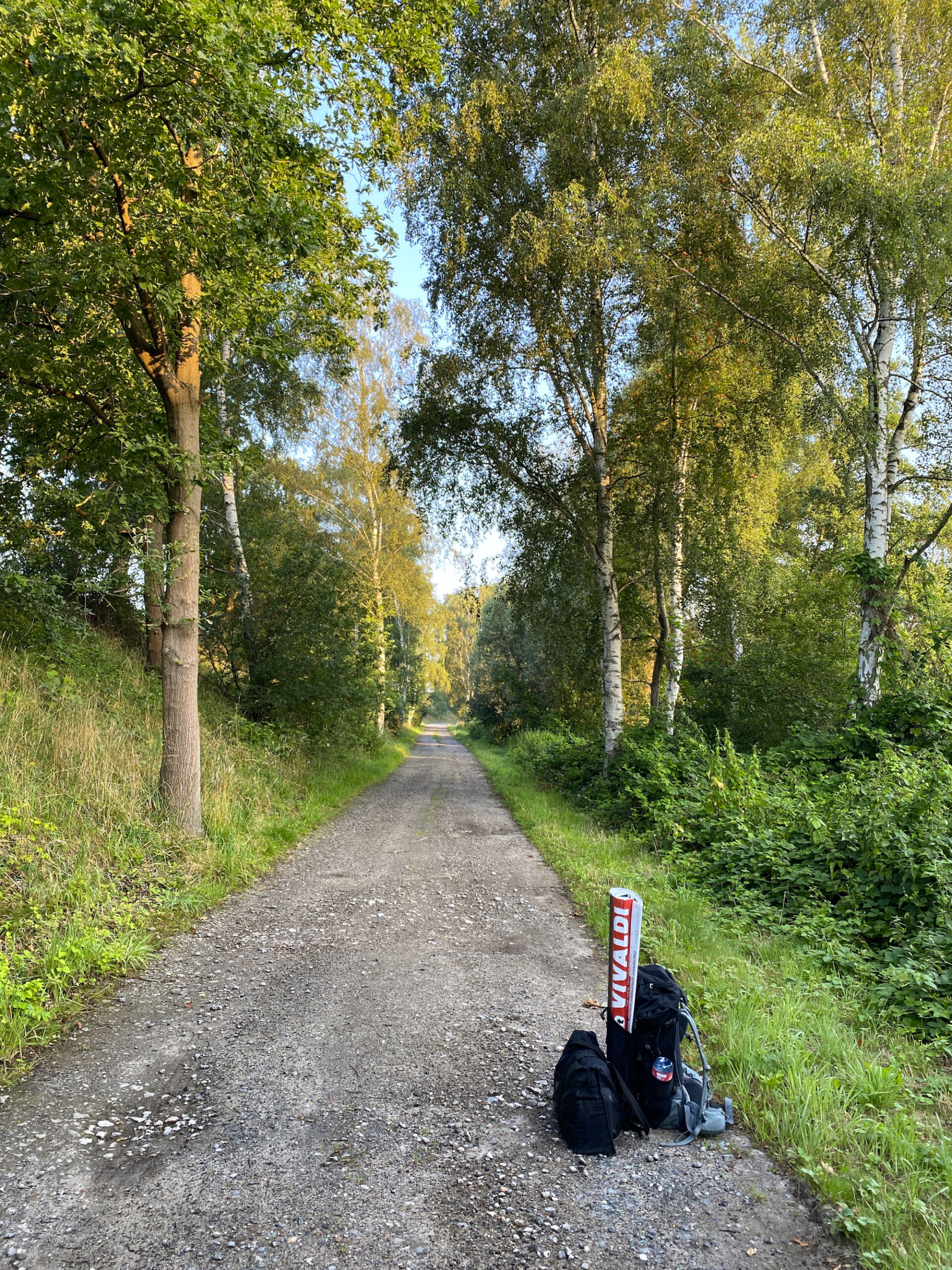
I carry just a normal sized backpack with sleeping bag depending on the weather conditions, clothing, photo camera for documentation, toiletries and a second bag with paint materials, all weather clothing, food and water. The fewer things you have, the easier is it to get off a stopping train or to escape in case of trouble.
Sleeping spots
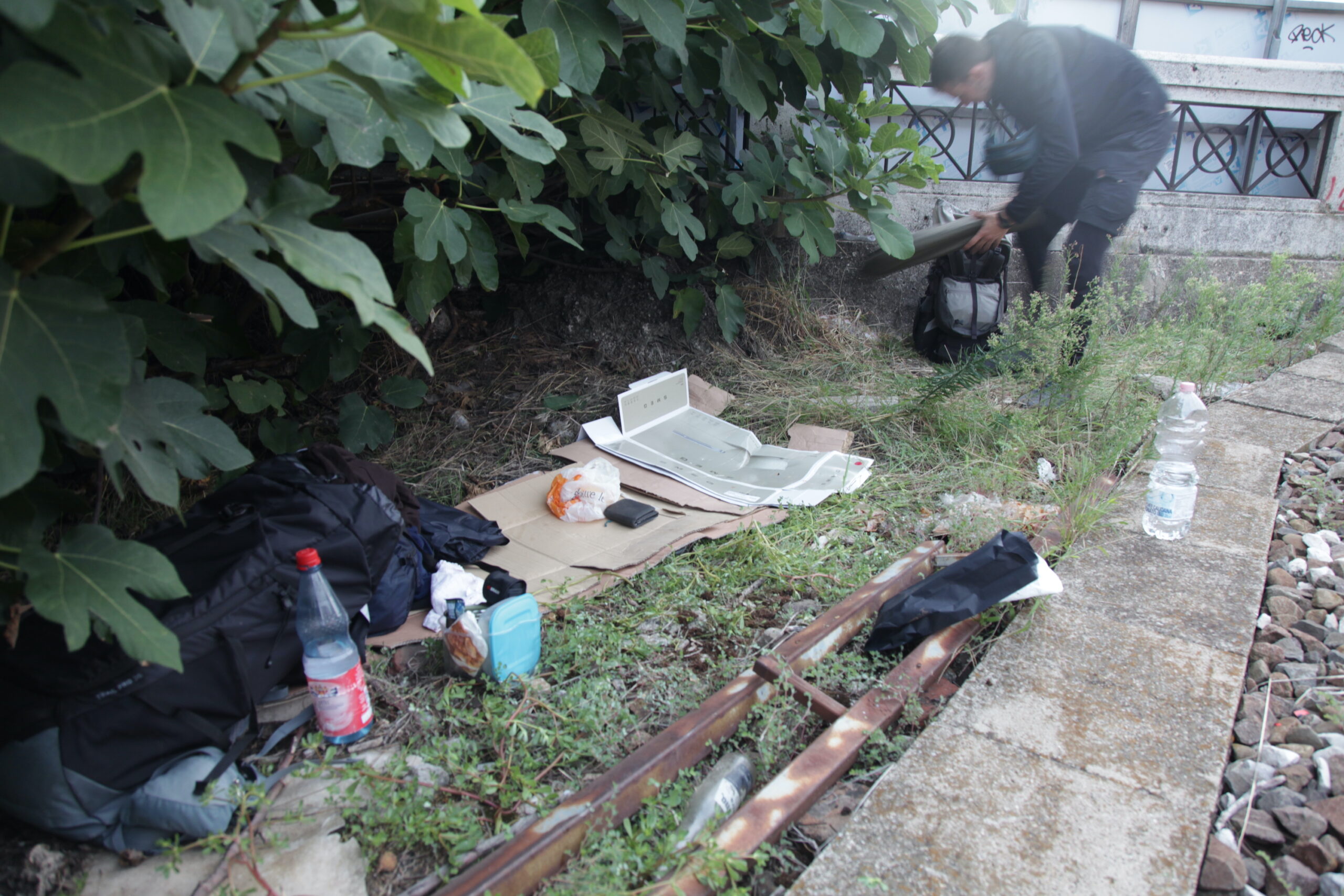
Usually I end up in more or less urban areas such as industrial areas, suburbs of larger cities or smaller towns and interchanges in the middle of the city. There it’s easy to find cardboard. Cardboard is essential for my sleeping spots. Instead of carrying a large isolation mat and a heavy tent I use this normally free material. I like to built small tents out of it when it’s cold outside. Enough cardboard is even more comfortable than a thin isolation mat. Instead of looking for abandoned buildings or other constructed shelters i prefer sleeping outside under the stars. Only in the case of rain i look for bridgesor other types of massive shelters. Instead of dust inside an empty building i prefer fresh air. If I won’t come back to the place the next night, i bring all the cardboard back to the place where i found it. Leaving no traces besides drawings or monikers, is good for the next one to come.
Campfire
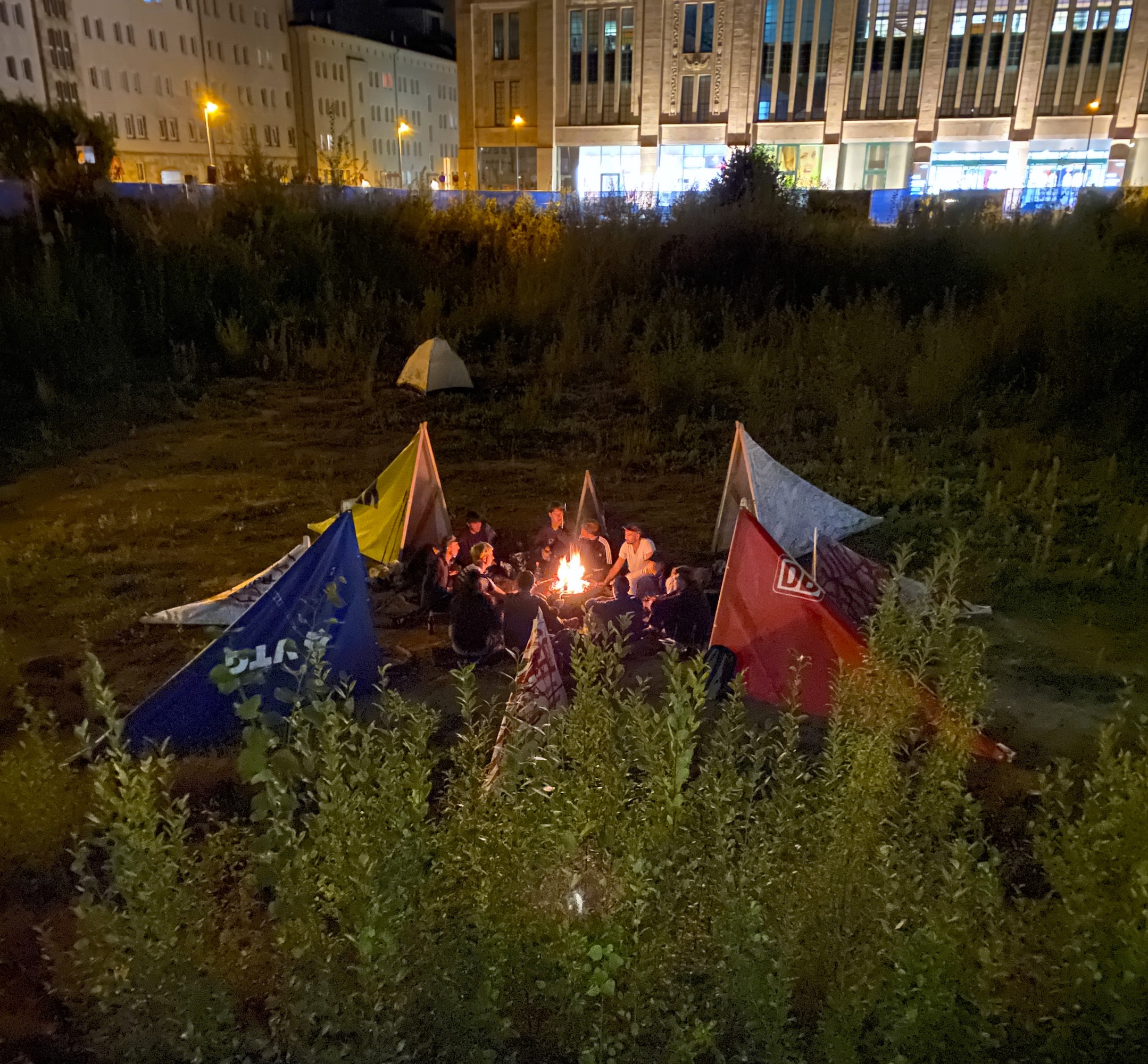
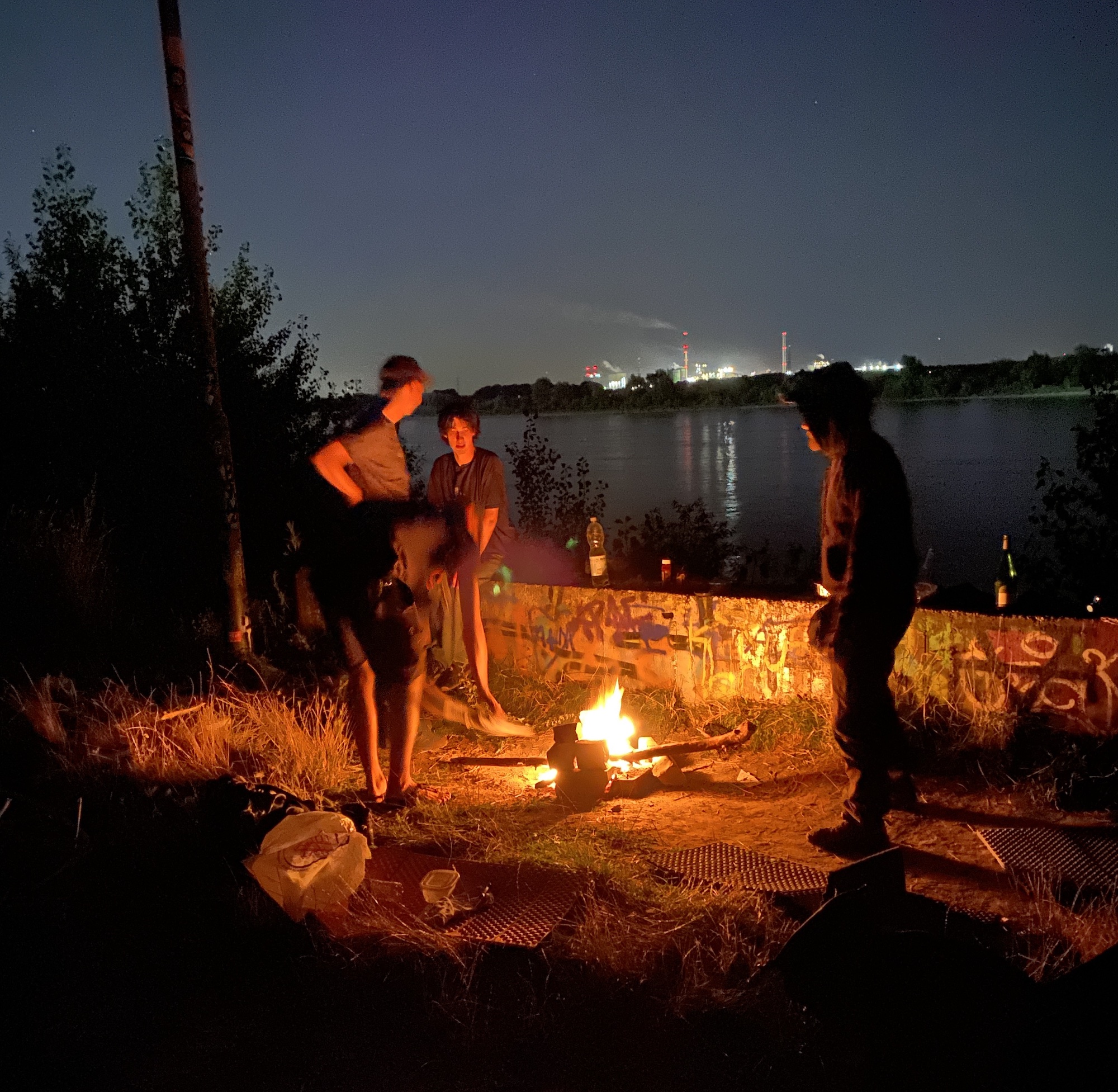
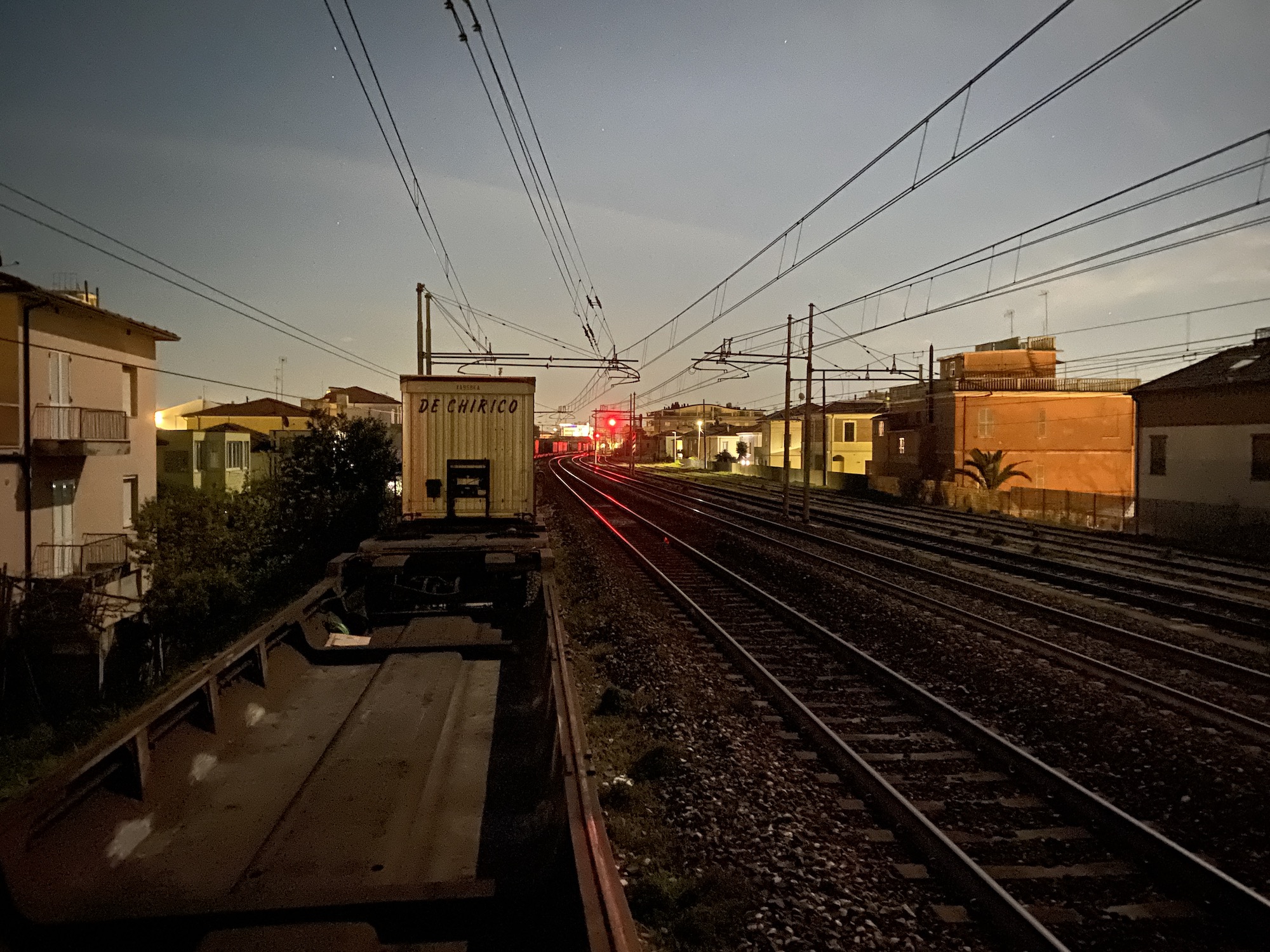
Sometimes nearby the train stops, there are small lakes or rivers. Then I really enjoy doing a campfire. Sometimes alone, sometimes with friends. We try to organise some food and sit around the campfire telling each other travel stories, gossip and prepare food. These are some of the most enjoyable moments during freight travels.
Some hopper groups organise meetings every year. They fix a date and a place. Then the people come together. They explore the place and hang out.
They look out for food, collecting berries and herbs. Steal in supermarkets or visit the local bakeries to buy fresh bread or croissants. In the evening they cook together and sometimes even have parties. After few days the groups spread. Some continue to travel together in one direction, other just continue on their own route, wherever they want to go.
RUBUS HOBOS
During my travels in central Europe, I met often one type of bush – the blackberry bush. I realised that despite leaving countless scratches on my legs, blackberries are very valuable shrubs. In summer, the bushes offer protection from intense sunlight, train drivers and security guards, plus bear juicy fruits that are ideal for flavourful jams.
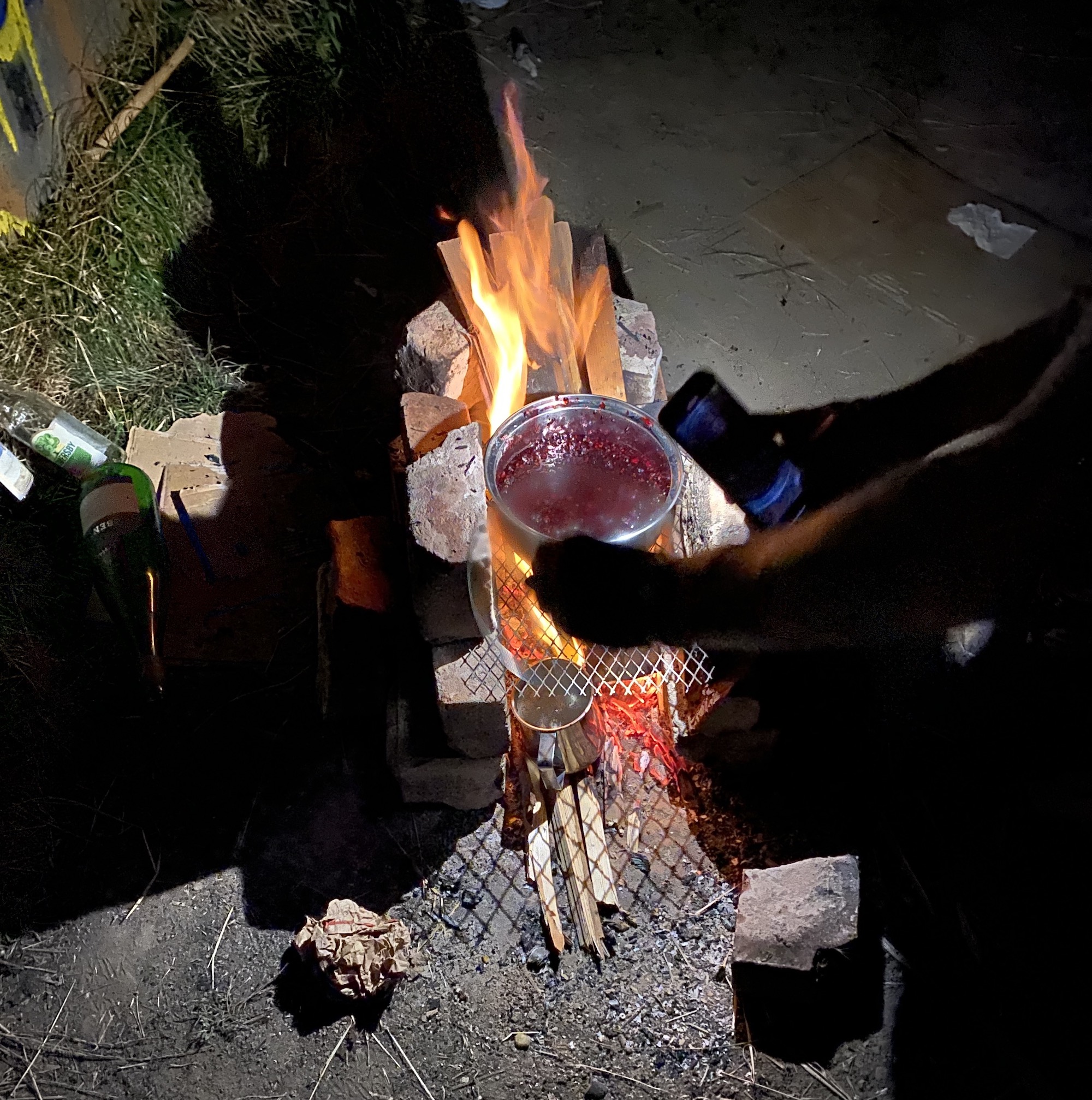
In 2024 I started to collect during my freight travels blackberries (Latin: RUBUS) and produced my own tasty jams. While waiting for freight trains in yards, terminals or at signals I started to draw map and describe cultivation areas along track sides. I documented the process and drew sketches inspired by his travels.
As a result I published already two guides in 2024 and 2025 called „RUBUS HOBOS – picking berries along the railroad tracks“ in German and English.
At the RUBUS HOBOS – Degustation I offer this extremely rare jams to the audience combined with french croissant and italian coffee at le Grand Jeu.
Short Glossary
Hobo – Hobos were originally migrant workers in the USA who, due to their precarious financial situation, used freight trains instead of passenger trains to get around. Sometimes they also rode passenger trains, but without a ticket.
Moniker – is the nickname of a hobo.
Monikers are also left on freight trains and at catch outs as characters similar to graffiti tags. Some freight hoppers also leave drawings instead of their moniker name. Markers and industrial chalk, such as Markal B, are used for drawing and writing.
Freight hopping – travelling on a freight train.
Jumping on – climbing onto the freight train. In reality, people don’t tend to jump on because it’s too dangerous.
On the fly – getting on the train when it’s already moving, a dangerous way to taking a freight train in Europe, because trains accelerate faster then in the US.
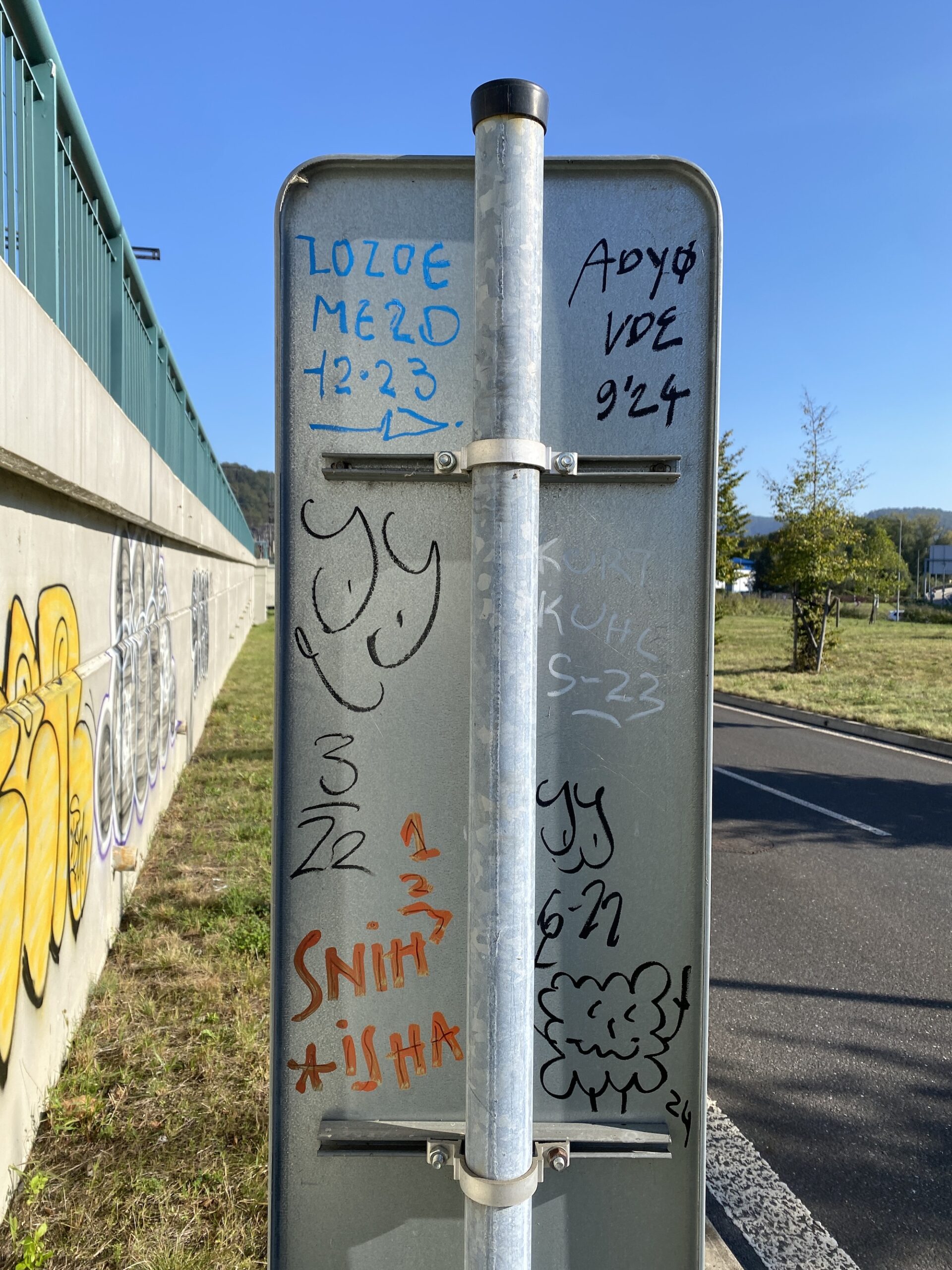
Catch Out / Hop Out – Catch outs are places where different freight trains often stop and where you can board them.
Signal / Red Light Spot – There are signals where freight trains stop particularly frequently due to the red signal. Hence ‘red signal spot’.
Crew change / Locomotive change – On long-distance freight train connections, the locomotive crew is changed. In addition, crews are often changed at border stations, as each country in europe has its own driving licences for locomotive drivers and it is rare for a locomotive driver to be allowed to drive in several countries.
Track gauge – there are different track gauges within Europe. Among other places, the tracks are wider in Spain and the former USSR (Russia including Ukraine, Belarus and the Baltic states). This means that the bogies under the trains have to be changed at these borders. Sometimes trains also terminate before the borders and are completely unloaded.
Freight transport corridor – the European Union has defined several freight transport corridors that run along several routes through Europe. Thanks to the establishment of these corridors, container block trains, among others, can cover long distances in a relatively short time. The combination with multi-system locomotives has further accelerated traffic.
Railway police – The railway police of the respective countries control the railway facilities.This also includes checking freight trains at borders. Freight station facilities are rarely checked within the country.
Railway workers – Railway workers shunt mixed trains and work in the signal towers of freight marshalling yards. They are therefore more stationary and not constantly on the move across the country like train drivers.
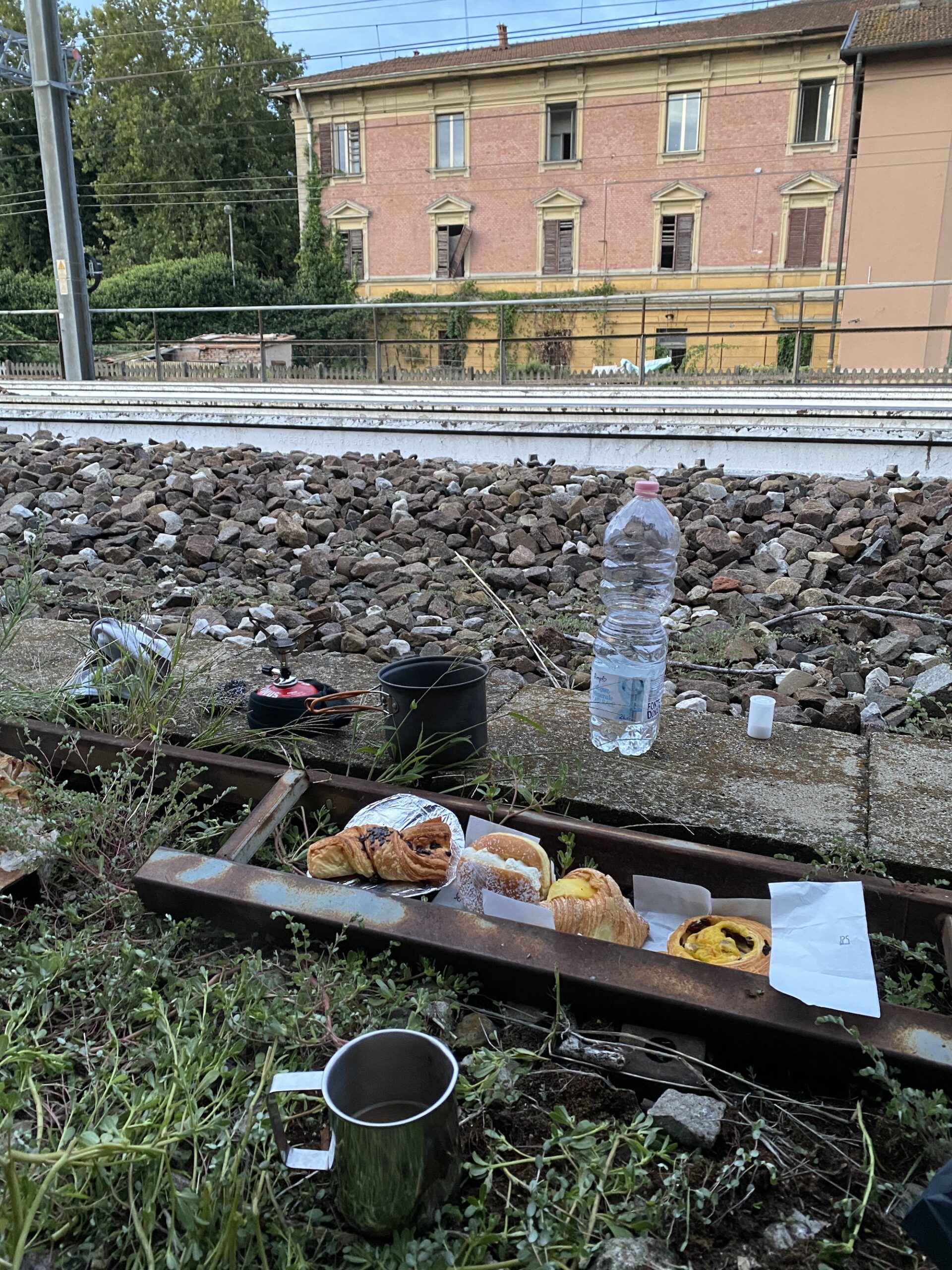
Container terminals – Container trains are loaded and unloaded at container terminals. Container terminals are located in port facilities and at central transhipment points, from where the containers are delivered to the surrounding regions.
Intermodal facilities – I.F. refers to locations where, among other things, pocket wagons are loaded with lorry trailers and where lorries pick them up and transport them further. Heavy-duty lifting machines that can be used anywhere are also employed to operate smaller I.F.s and smaller container terminals. This is why some of these locations are in open spaces or unused railway areas.
Freight marshalling yard – colloquially also known as a freight yard where freight trains are compiled or split and locomotives are attached.
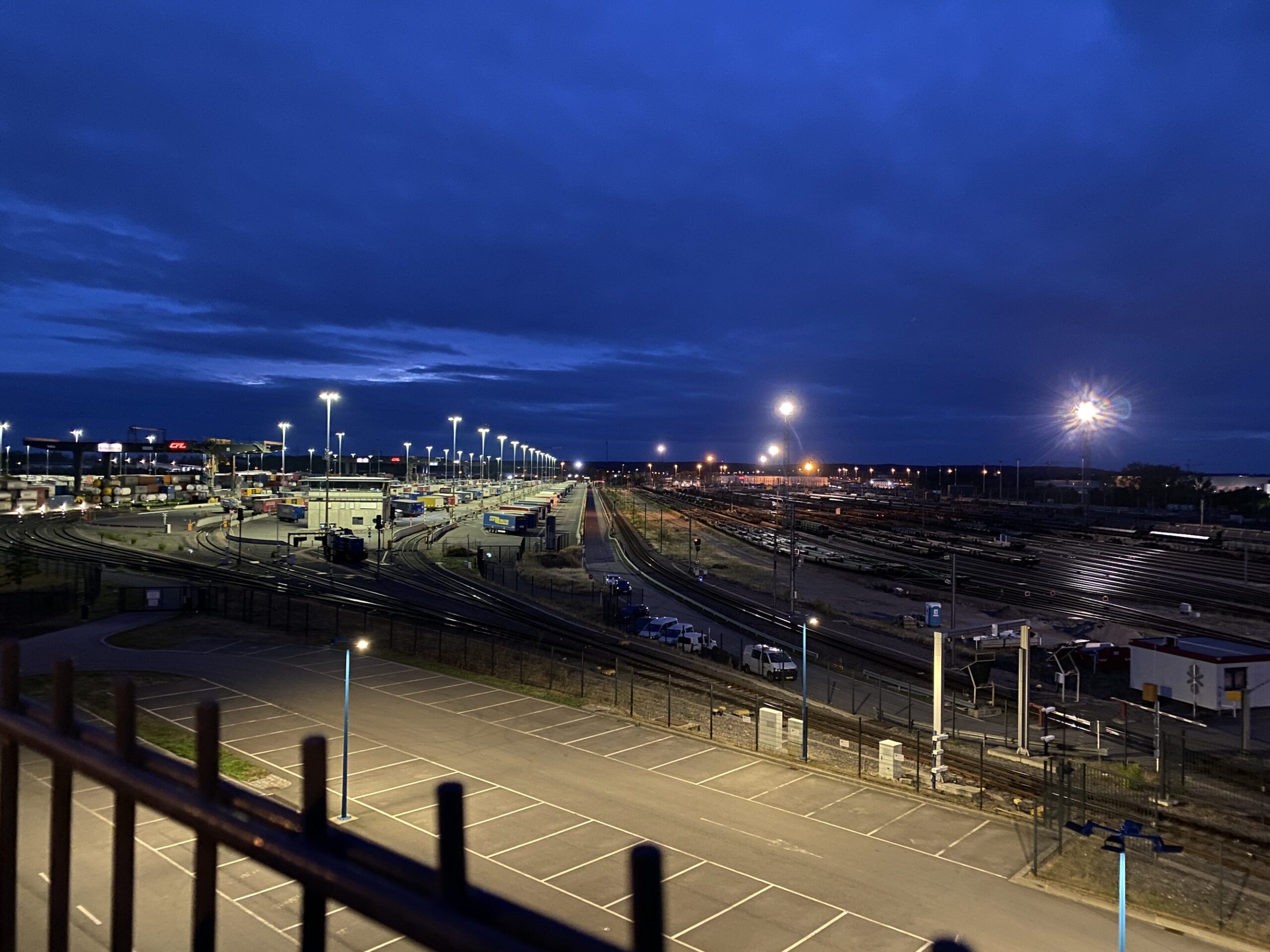
Some types of trains which are used for freight riding
Gondola – open bulk freight wagons are designed for coal, sand and stoneware and are also used for steel rolls, steel scrap and other goods that can be exposed to the weather. Some freight hoppers climb into the wagons from the sides, but this is dangerous on electrified lines due to the proximity of the overhead line.
Flat cars – wagons transporting containers, truck trailers or larger vans, which often run as block trains.
Autorack car – Wagons for cars, SUV and smaller vans. In some countries, the loaded cars are open, so it is possible to ride along in them.
Boxcars – In North America, boxcars were often used by hobos in the past. Some boxcars moved with open doors. This made it easy to board the wagons and provided protection from the weather. In Europe only closed boxcars run.
Pocket wagons – there are different types of pocket wagons – with completely closed floors (full bottom) and only partially closed floors. Pocket wagons were originally designed for truck trailers. There are also pocket wagons on which containers can be loaded.
Covered Hopper Car – waggons equipped with a fixed roof and mostly used for cargo that must be protected from exposure to the weather such as grain, sugar, fertilizer or cement. In Europe „Transcereales“ is a famous operator of grain trains.
Links
Art Project Res Publica Intermodal – https://www.anartchy.com/projekte/res_publica/res_publica.html
Other – https://www.instagram.com/otherscribbles/
Freight Train Graffiti – https://books.google.de/books/about/Freight_Train_Graffiti.html?id=3gTrGwAACAAJ&redir_esc=y
Jiem – https://www.instagram.com/jiem.folklines/
Shiey & Gifgas – https://www.youtube.com/watch?v=Ao02yupEi_o